
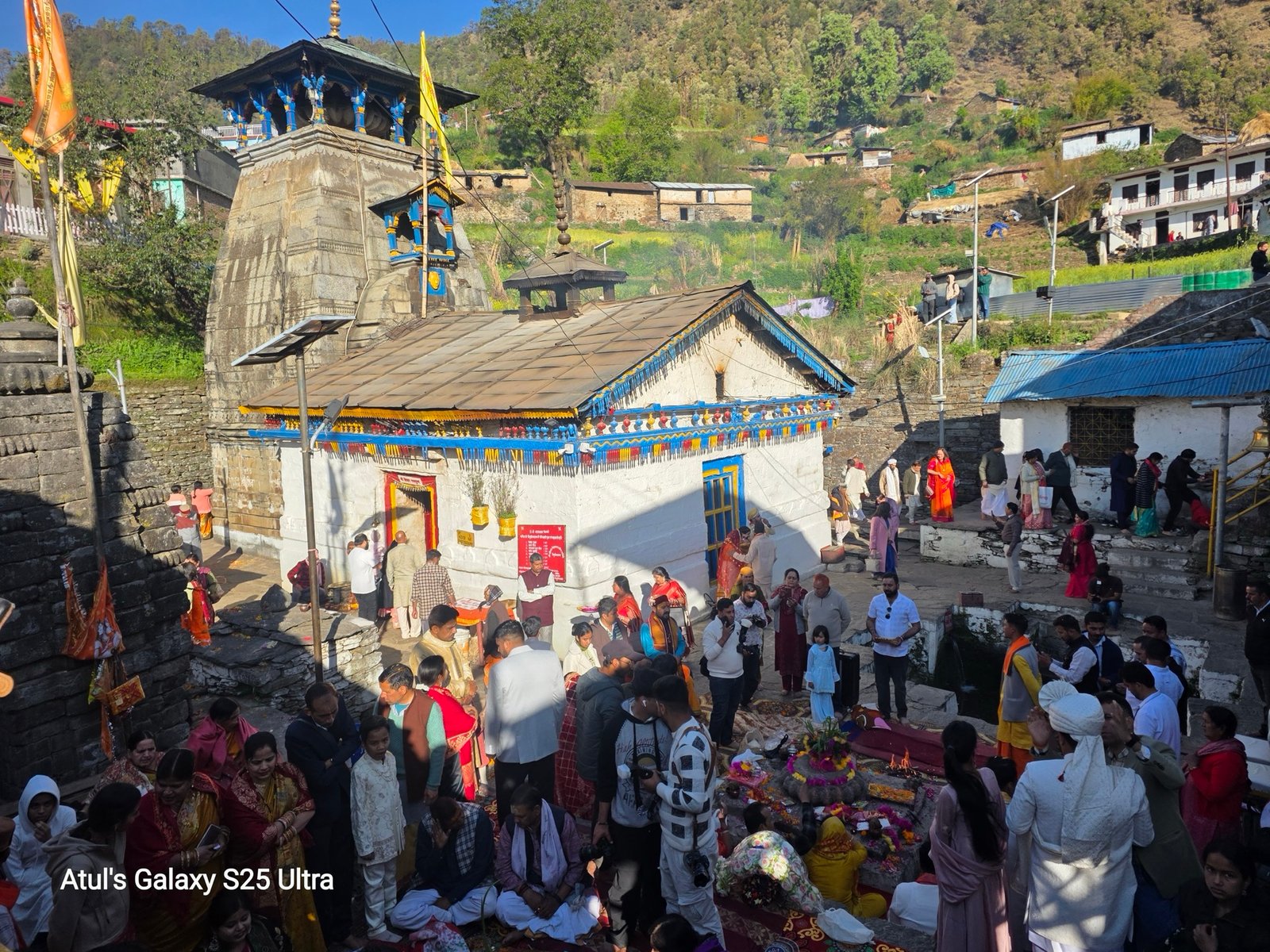
Rudraprayag - Uttarakhand - 1,980 m
Triyuginarayan Temple
The mythological site where Lord Shiva married Goddess Parvati, witnessed by the Hindu Trinity. At the sanctum burns the Akhand Dhuni - a perpetual flame believed to have remained alight since the Satya Yuga, spanning three cosmic eras. Couples today take their pheras around the same fire that consecrated the divine union.
Why it is called Triyuginarayan
The name is a composite of three Sanskrit roots: Tri (three), Yugi (ages), and Narayan (Lord Vishnu). It is a linguistic testament to the temple's status as an unbroken witness across cosmic eras - the Akhand Dhuni has, by tradition, remained alight since the Satya Yuga.
Though the wedding that lit the fire was Shaivite, the temple is dedicated to Lakshmi Narayan - a form of Vishnu. The reason: Lord Vishnu took the role of Parvati's brother and performed the kanyadaan, the ritual of giving away the bride. Lord Brahma was the presiding priest. The presence of all three deities - creator, preserver, destroyer - at a single ceremony is what makes the site theologically unique.
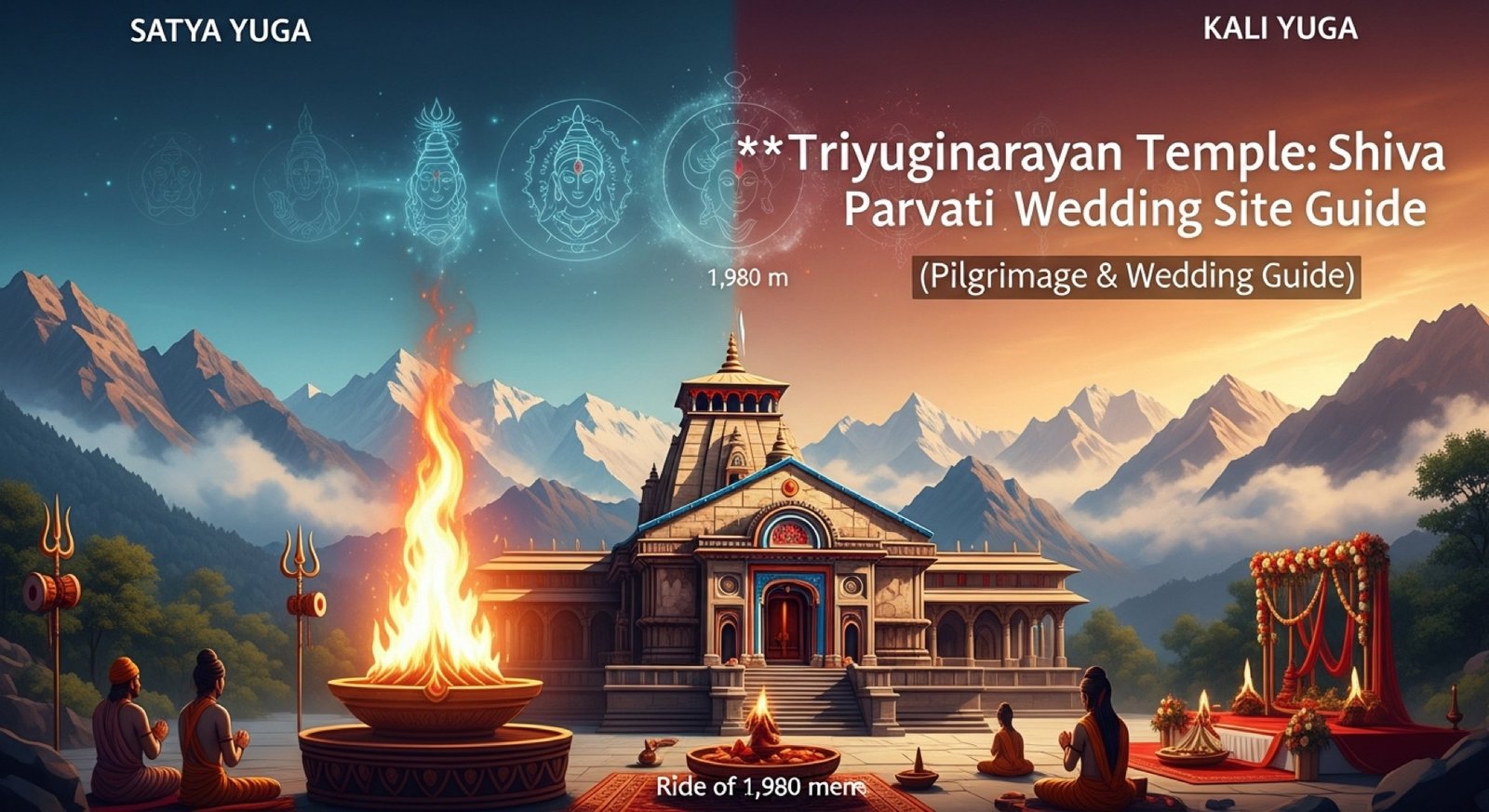
| Cosmic Era | Philosophical Context | Significance at Triyuginarayan |
|---|---|---|
| Satya Yuga | Age of Truth and Purity | The era of the divine marriage and the ignition of the perpetual flame. |
| Treta Yuga | Age of Diminishing Virtue | The temple served as a sanctuary for sages during this transitional period. |
| Dvapara Yuga | Age of Further Moral Decline | Visited by the Pandavas during their final Himalayan ascent. |
| Kali Yuga | Present Age of Strife | The temple remains a beacon for conjugal bliss and spiritual refuge. |
The wedding of Shiva and Parvati
Goddess Parvati - reincarnated from Sati, Shiva's first wife, and daughter of Himavat (the personification of the Himalayas) - performed rigorous penance at Gauri Kund, five kilometres from the temple, to win the hand of the ascetic Shiva who was meditating at Guptakashi. Her devotion succeeded, and Triyuginarayan - then the capital of Himavat - was chosen as the site for the ceremony.
The theological significance is elevated by the active participation of the entire Hindu Trinity. Lord Vishnu played the role of Parvati's brother and performed the kanyadaan. Lord Brahma served as the presiding priest. Lord Shiva stood as the groom. A rare moment of sectarian harmony where the preserver, creator, and destroyer converged to validate a union essential for cosmic balance.
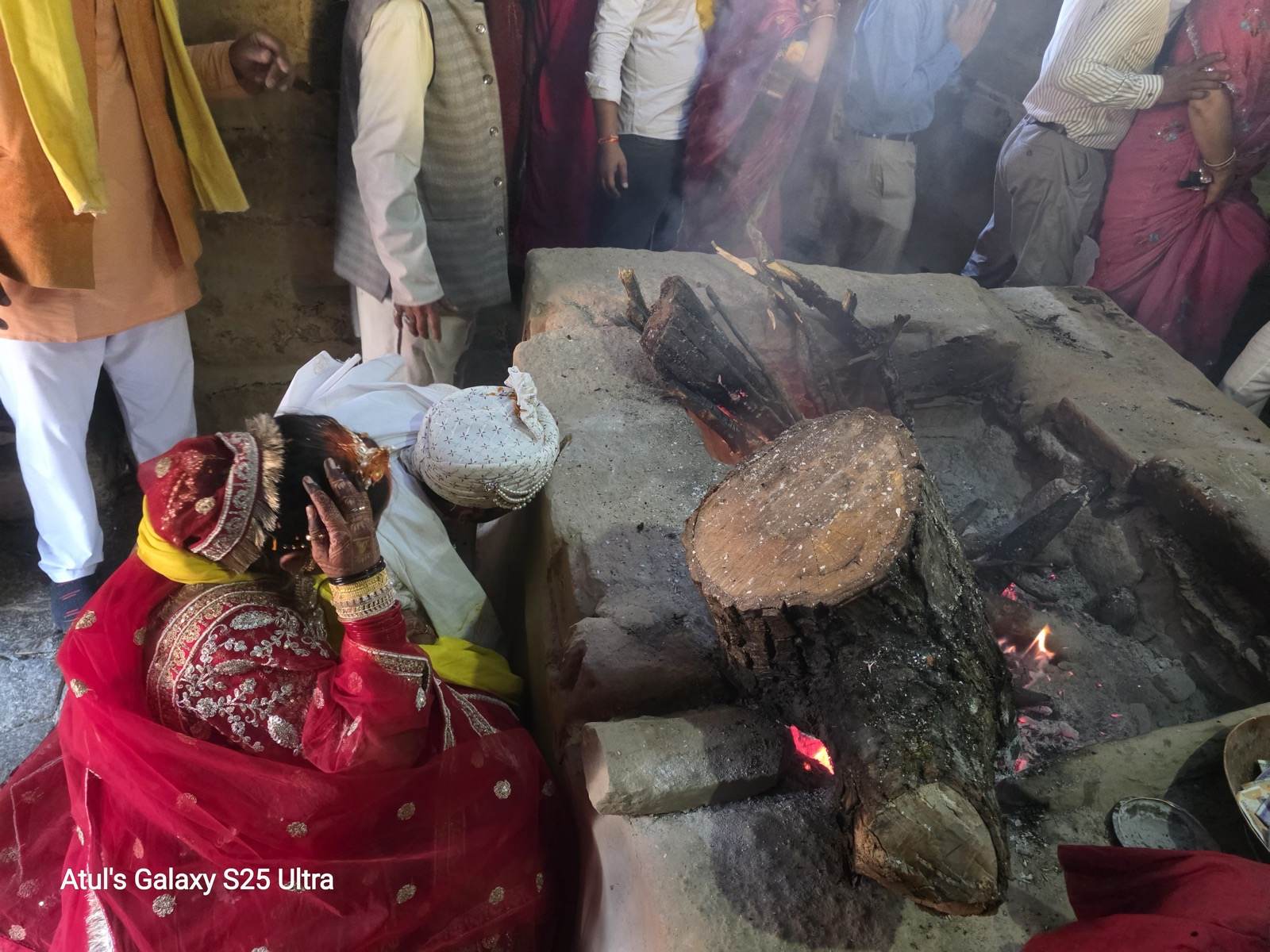
The physical evidence of that event is the Akhand Dhuni - the sacred fire that witnessed the vows and has been maintained without interruption by the local Jamloki Brahmins for generations.
Architecture and the four sacred kunds
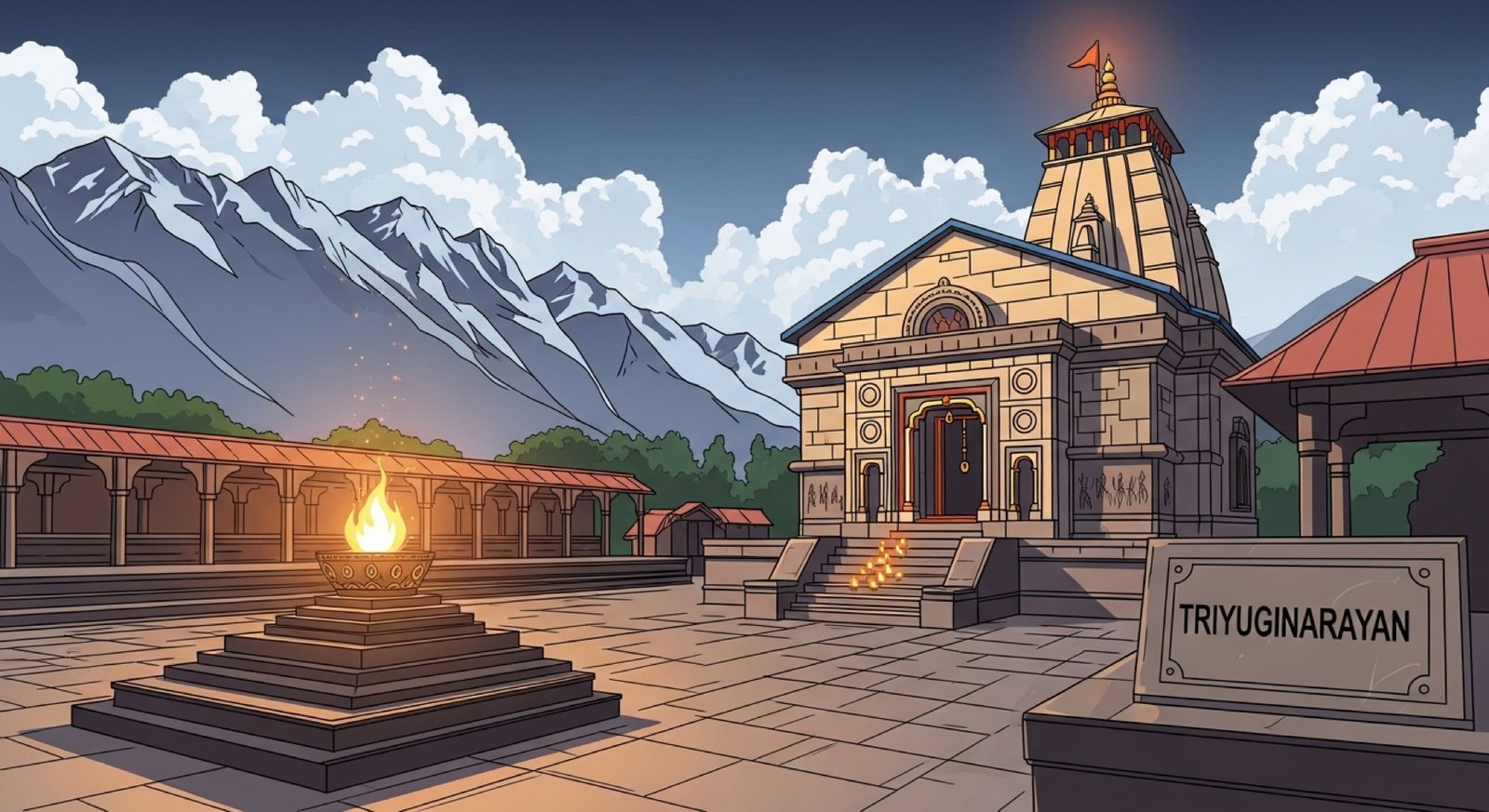
The temple was revitalised in its current form by Adi Shankaracharya in the 8th century CE, in the North Indian Himalayan (Katyuri) style. It is built from large grey stone slabs and mirrors the design of the Kedarnath Temple - not only aesthetically but structurally, a shared school of craftsmanship that prioritised durability against the Himalayan climate.
The garbhagriha houses a two-foot silver idol of Lord Vishnu as Narayana, flanked by Lakshmi (prosperity) and Saraswati (knowledge). The precinct also contains shrines to Hanuman, Ganesha, Garuda, and Annapurna Devi. The eastern entrance features intricate deity carvings.
Four sacred kunds (ponds) in the courtyard are fed by a perennial stream called the Saraswati Ganga. Mythology traces its source to the navel of Lord Vishnu. Deities are said to have used these ponds to purify themselves before the wedding.
- Rudra Kund - Used for ritual bathing before entering the shrine. Associated with Lord Shiva.
- Vishnu Kund - Used for cleansing rituals. Represents the purifying power of the preserver.
- Brahma Kund - Water used for achamana - ceremonial sipping - to cleanse the inner self.
- Saraswati Kund - The primary source pond for libations. Considered highly potent for moksha.
The kunds are believed to cure infertility and promote spiritual well-being - the primary reason thousands of couples visit each year seeking healing before or after their own weddings.
From our team on-site
Saffron Chariot visited Triyuginarayan Temple in person. The short clip below shows the actual temple and courtyard so you know exactly what to expect - not a stock image or a stitched reel.
Filmed by Saffron Chariot on location. Running time ~13 seconds.
Weddings at Triyuginarayan
Over the last decade the temple has transitioned from a purely traditional pilgrimage site to a globally recognised destination for Vedic weddings. Couples are drawn by the chance to take their pheras around the very fire that witnessed the wedding of Shiva and Parvati.
Formal procedures
The process is two-part. The religious ceremony is registered with the Tirtha Purohit Samiti for approximately ₹1,100. This requires government ID (Aadhaar or passport) and the ceremony is performed by a qualified temple priest according to Vedic rites. The temple issues a ceremonial receipt but this is not a legal marriage certificate. For legal recognition, couples must separately register under the Special Marriage Act at the Sub-Registrar's office in Rudraprayag.
Economics of a Triyuginarayan wedding
Costs vary sharply with guest count and service level. Because of the remote location, logistics - not decor or catering - tend to dominate the budget.
| Tier | Estimated Cost (INR) | Inclusions |
|---|---|---|
| Simple Ceremony | ₹35,000 - 40,000 | Core rituals at the temple, priest fees, essential puja materials. |
| Intimate Wedding | ₹65,000 - 95,000 | Services for up to 10 guests, basic accommodation, vegetarian meals. |
| Mid-Sized Wedding | ₹1,50,000 - 3,50,000 | Catering and stay for 20-30 guests, photography, simple decor. |
| Large Celebration | ₹4,00,000 - 8,00,000 | Logistics for 50-100 guests, enhanced decor, videography, multi-day planning. |
| Luxury / Bespoke | ₹8,00,000 - 15,00,000+ | High-end resorts, helicopter transfers, specialised event management. |
Wedding guide at a glance
A visual summary of procedures, costs, and the ritual flow.
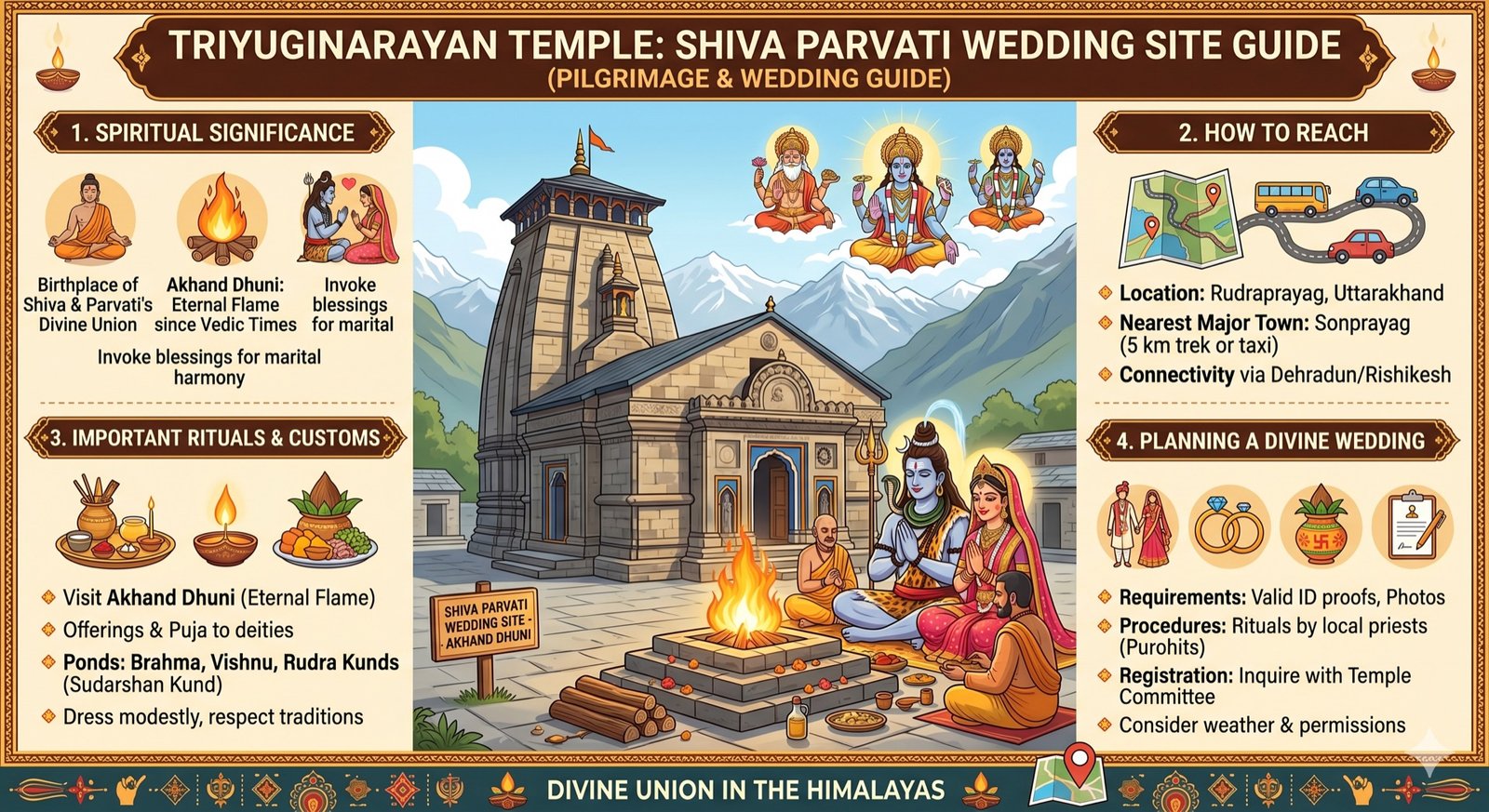
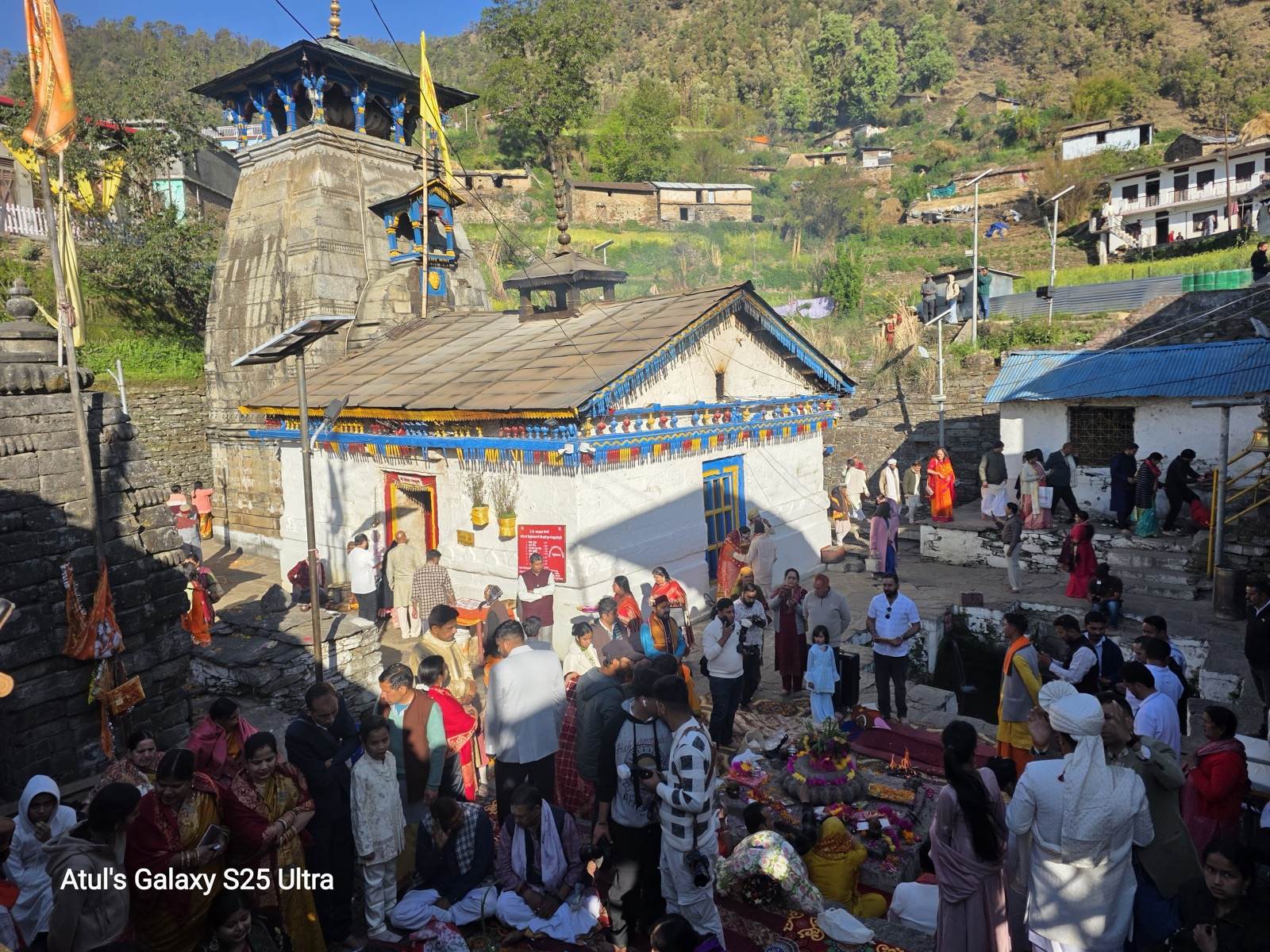
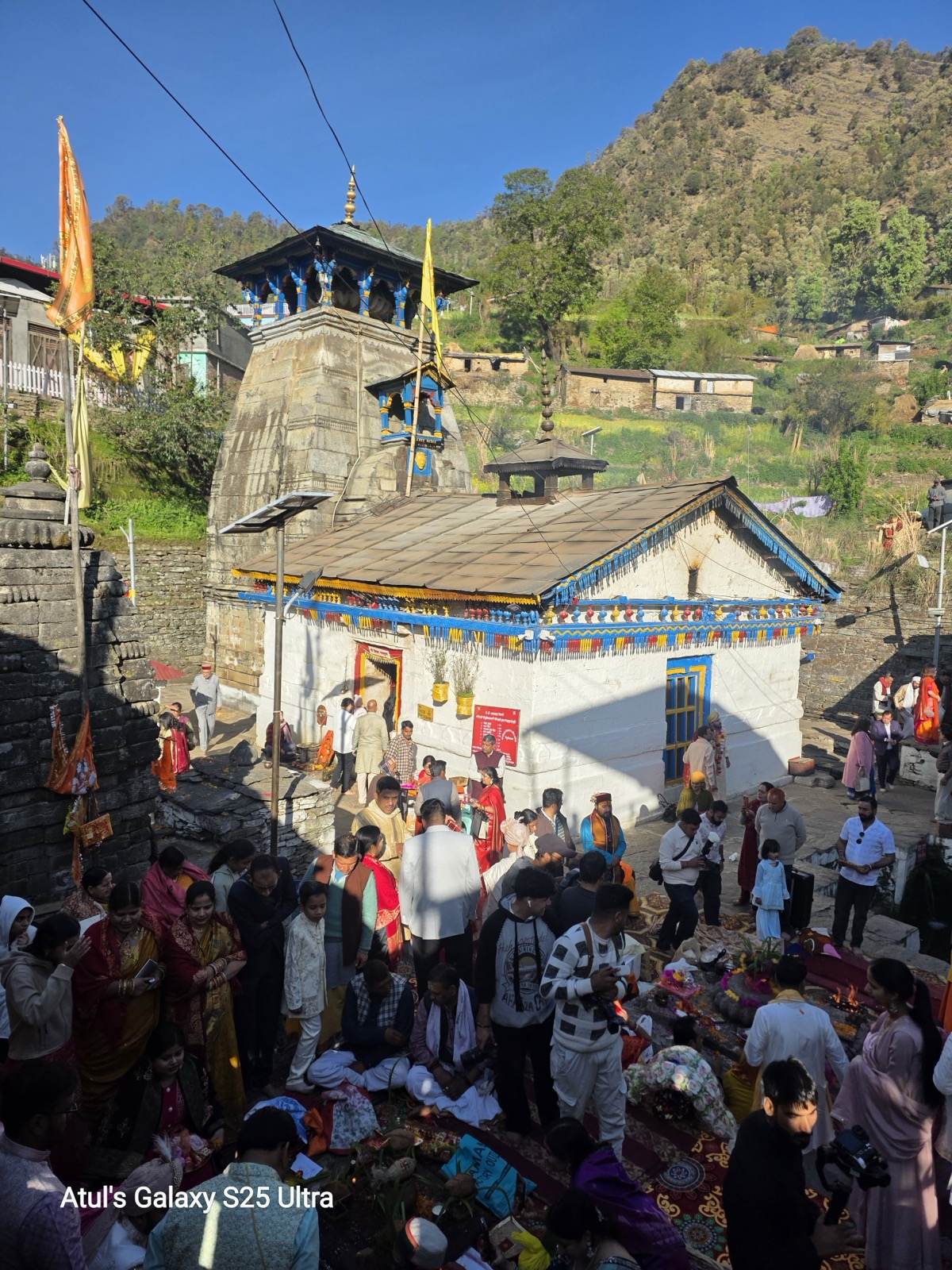
Triyuginarayan weddings & temple photos
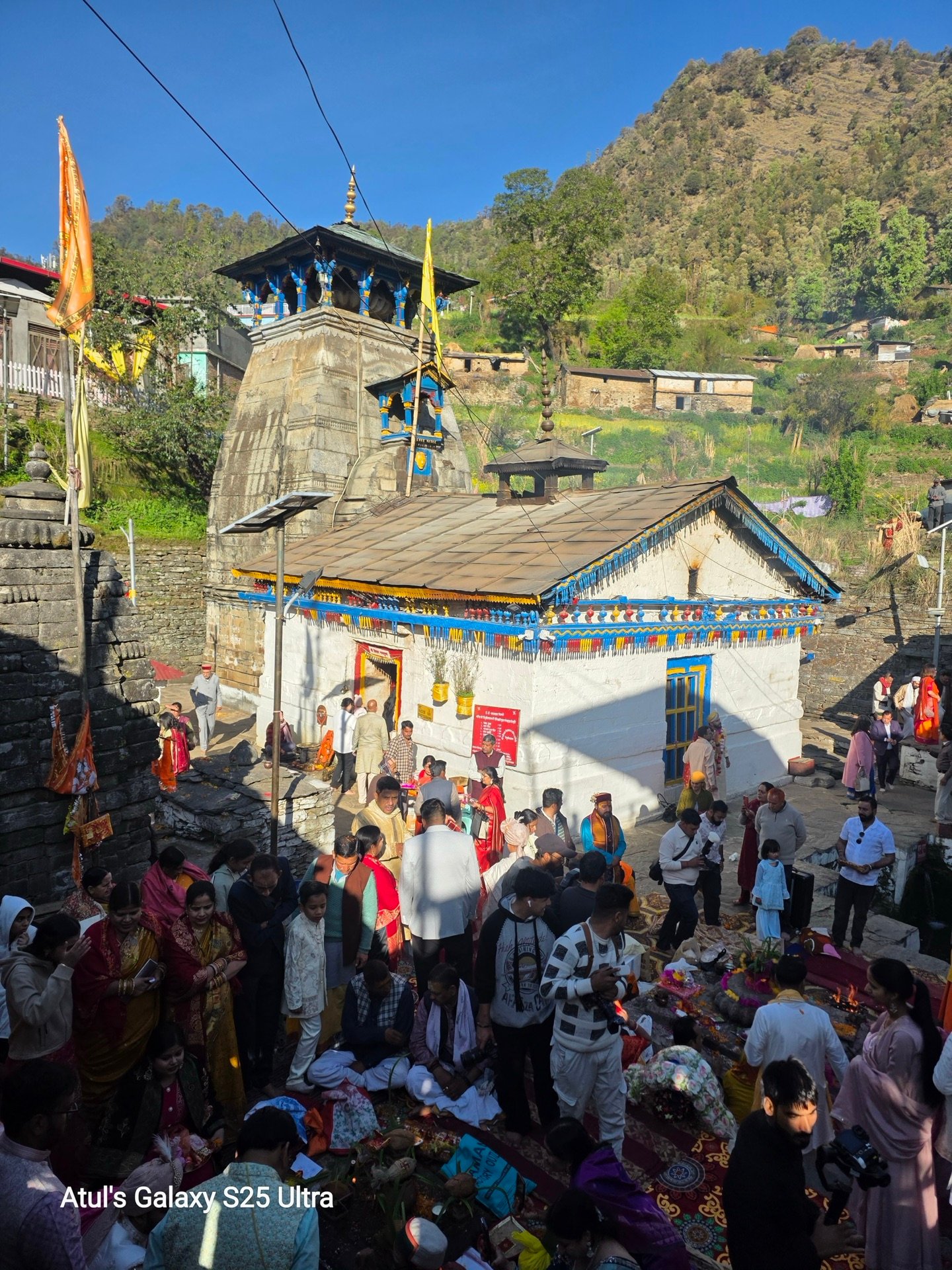
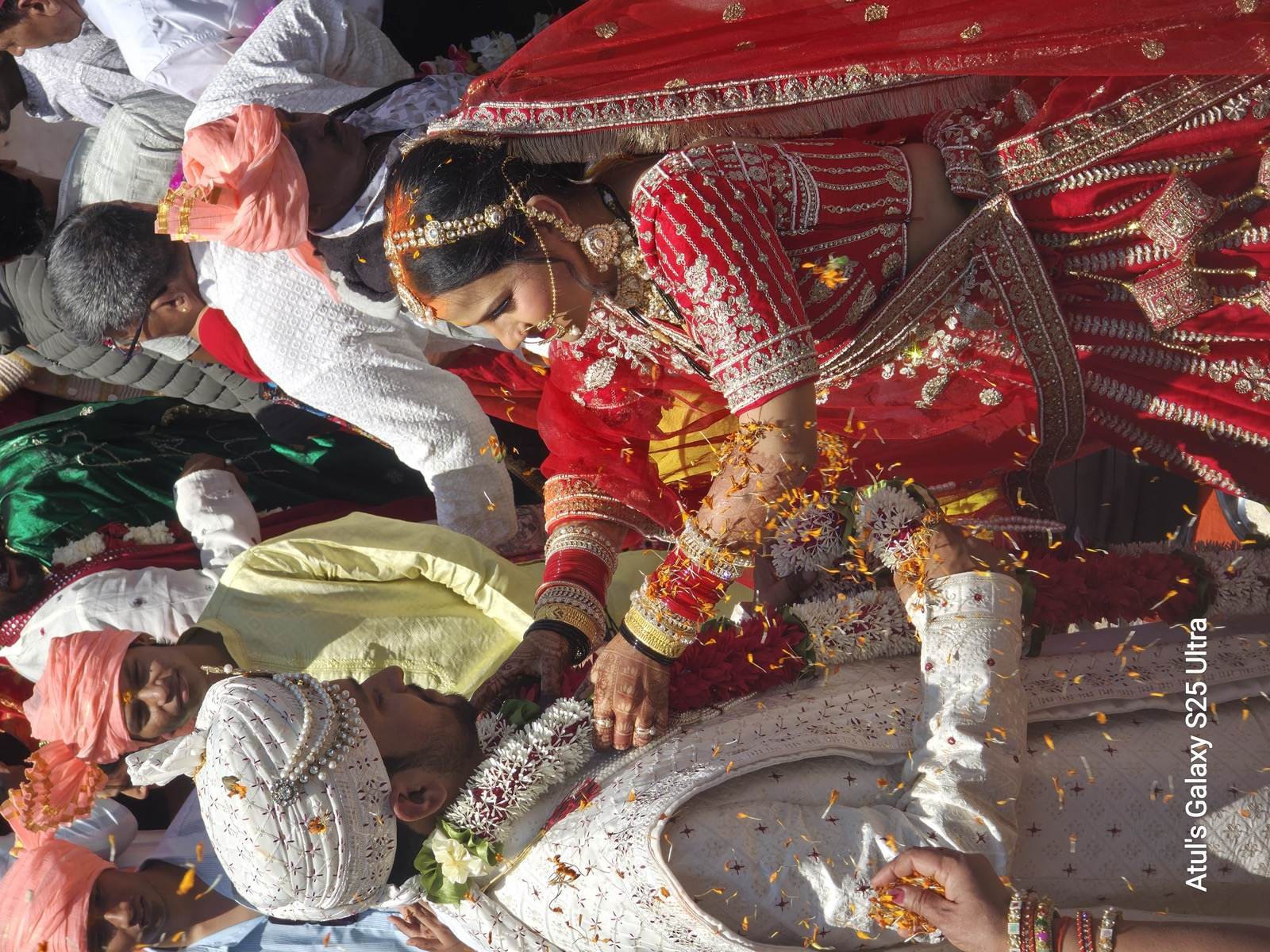
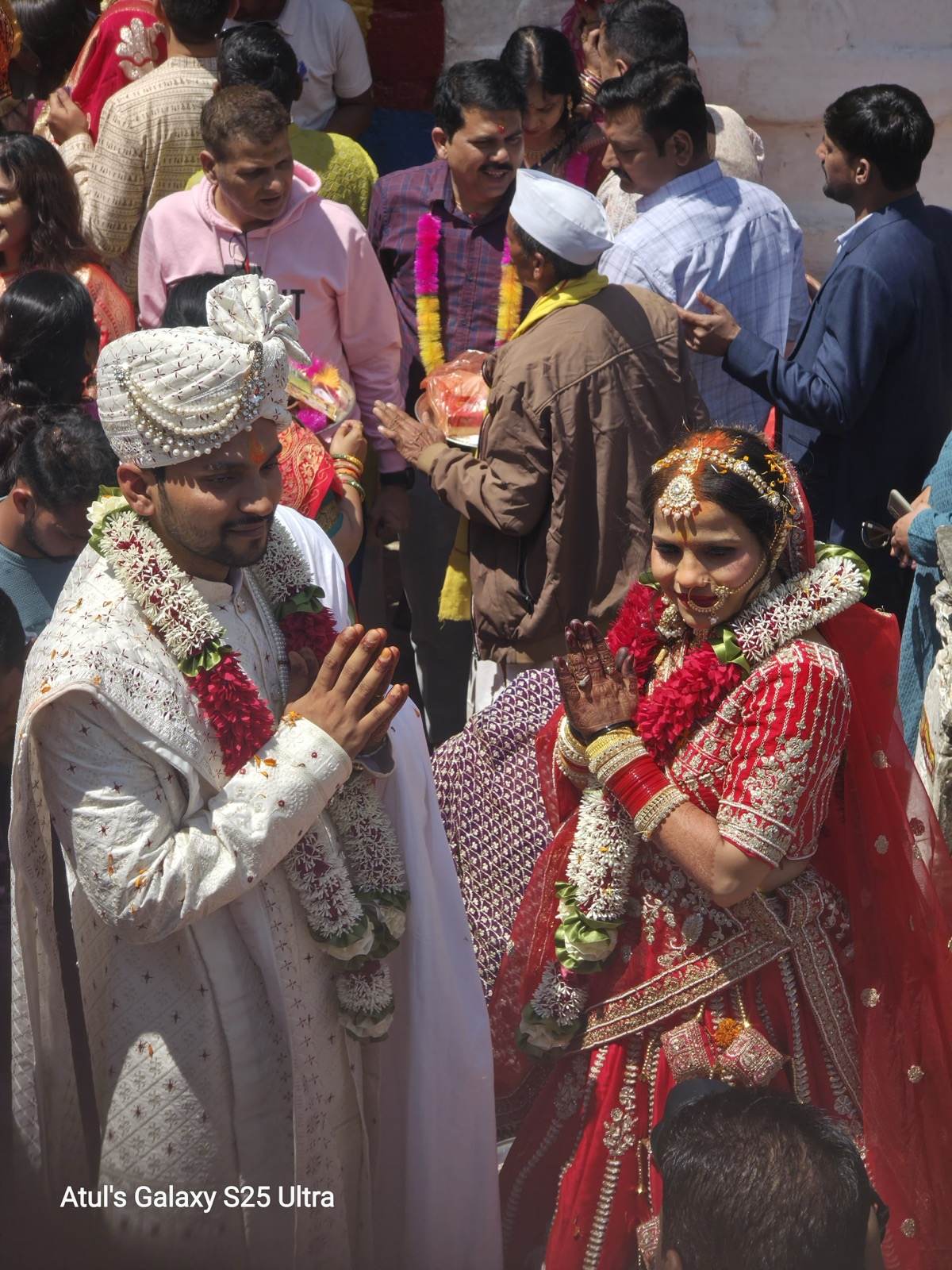
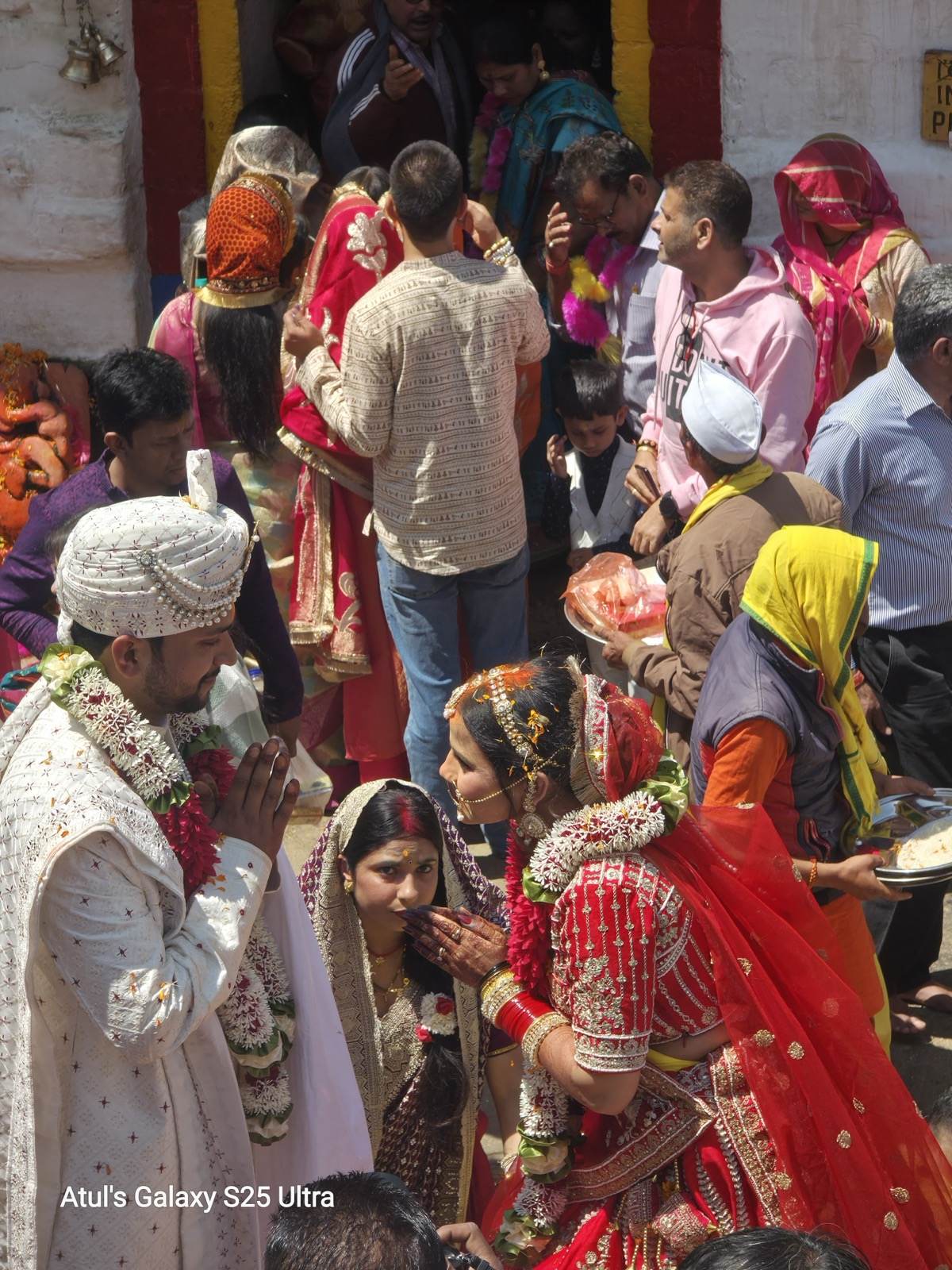
Real photographs from a Saffron Chariot visit in April 2026 - the temple, the eternal Akhand Dhuni, and a wedding held on site (the pheras around the flame, the flower shower, the garland exchange). Not stock imagery.
How to reach Triyuginarayan
The journey begins from Delhi, Haridwar, or Rishikesh. The final 12 km from Sonprayag is a narrow mountain road and needs a small car, SUV, or shared jeep. Daylight driving is strongly recommended.
| Mode | Nearest Point | Distance | Travel Time |
|---|---|---|---|
| Air | Jolly Grant Airport, Dehradun | 226 km | 9-10 hours by road |
| Rail | Rishikesh Railway Station | 212 km | 8-9 hours by road |
| Road | Sonprayag Junction | 12 km | 30-45 min (narrow road) |
Route from Delhi (450-500 km, 12-14 hours)
Delhi → Haridwar → Rishikesh → Devprayag → Rudraprayag → Guptkashi → Sonprayag → Triyuginarayan. An overnight stop is standard - Rishikesh or Rudraprayag are the usual choices.
Route from Haridwar or Rishikesh (220-240 km, 8-10 hours)
The drive follows the Ganga, Alaknanda, and Mandakini rivers. National highway conditions to Guptkashi are good; the final Sonprayag-Triyuginarayan stretch remains a single-lane track with sharp bends and monsoon landslide risk.
On foot from Sonprayag
A 5 km trek through dense pine and rhododendron forests reaches the temple in 2-3 hours. A gentle alternative to the road and the route most often used by traditional pilgrims. The parallel Sitapur route (7 km) avoids the Sonprayag vehicle traffic entirely.
When to visit
Himalayan seasons shape every plan. Monsoon (July-August) is hazardous. Winter (December-March) is for solitude seekers only. Weddings and most pilgrimages happen April-June or September-November.
| Month | Max | Min | Notes |
|---|---|---|---|
| January | 10 C | -1 C | Very chilly, potential snow. |
| March | 15 C | 2 C | Refreshing, start of spring. |
| May | 25 C | 10 C | Sunny, perfect for trekking and weddings. |
| July | 25 C | 14 C | Heavy rains, high landslide risk. |
| September | 24 C | 12 C | Cloudy and pleasant, clear peak views. |
| November | 15 C | 3 C | Crisp air, high visibility. |
Celebrities married here
The temple gained national visibility after a succession of public figures chose it as their wedding venue. It is reported to have been considered by the Ambani family as well. Bollywood personalities such as Janhvi Kapoor and Sara Ali Khan visited in 2021 for spiritual reasons.
- Kavita Kaushik - Television actress, married here in 2017
- Nikita Sharma - Actress, November 2021
- Aarti Singh (Govinda's niece) - Vow renewal with Deepak Chauhan, April 2025
- Chitra Shukla - Telugu actress, married IFS officer Vaibhav Upadhyay
- Hansraj Raghuvanshi - Devotional singer
Combine with a Char Dham helicopter yatra
Triyuginarayan sits 25 km from Kedarnath and 12 km from Sonprayag. The most efficient way for pilgrims flying in from Delhi, Mumbai, Pune, or Ahmedabad to include it is to pair a 5-Night 6-Day Char Dham helicopter package with a half-day road extension from Sonprayag. This is practical on return day, after Kedarnath darshan.
For couples planning a luxury wedding, Saffron Chariot can arrange helicopter transfers for guests from Sahastradhara helipad in Dehradun - bringing the Luxury/Bespoke tier within a realistic logistics envelope even for out-of-state families.
Nearby sacred sites
- Gauri Kund (15 km) - the site of Parvati's penance and the traditional starting point for the Kedarnath trek. Natural hot water spring.
- Gauri Gufa (0.5 km) - a small cave near the temple, another site associated with Parvati's meditation.
- Shree Munkatia Ganesh Temple (13 km) - on the route between Sonprayag and Gaurikund, commemorating a moment from Ganesha's mythology.
- Shri Mata Shakambhari Devi Temple (2.3 km) - a local shrine to the goddess of nourishment.
- Kedarnath Temple (25 km) - the crown jewel of the Char Dham circuit.
- Panwali Kantha trek - a 5-day expedition reaching 3,400-3,500 m, ending at Triyuginarayan. Best during summer and autumn.
Frequently asked questions
Why is it called Triyuginarayan?
Tri (three) + Yugi (ages) + Narayan (Vishnu). The Akhand Dhuni has burned through three cosmic eras and into the present Kali Yuga. The temple is dedicated to Vishnu because he performed the kanyadaan at Shiva and Parvati's wedding.
How much does a wedding cost?
From ₹35,000 for a simple temple ceremony to ₹15 lakh and above for a luxury bespoke event with helicopter transfers. Religious registration is ₹1,100 at the Tirtha Purohit Samiti.
Do I get a legal marriage certificate from the temple?
No. The temple issues a ceremonial receipt. For a legally recognised certificate, register separately under the Special Marriage Act at the Sub-Registrar's office in Rudraprayag.
Is alcohol allowed? Non-vegetarian food?
Neither. Within the temple precinct all food must be strictly vegetarian, and alcohol and loud music are prohibited. These rules apply at all tiers.
How far is it from Kedarnath?
About 25-27 km. From Sonprayag (the Kedarnath trek starting point) it is a 12 km drive or a 5 km forest trek.
Can I combine it with a Char Dham helicopter yatra?
Yes. The most efficient plan is to add a half-day road extension from Sonprayag to a 5N6D helicopter Char Dham package, on return day after Kedarnath.
What about monsoon travel?
Avoid July-August. The Sonprayag-Triyuginarayan stretch is vulnerable to landslides. Winter (December-March) is open but services are intermittent.
Is the Akhand Dhuni genuinely eternal?
By tradition, yes. The local Jamloki Brahmin families have maintained the flame for generations. Pilgrims offer wood samidha as part of their darshan.