Har Ki Pauri (Gangadwara)
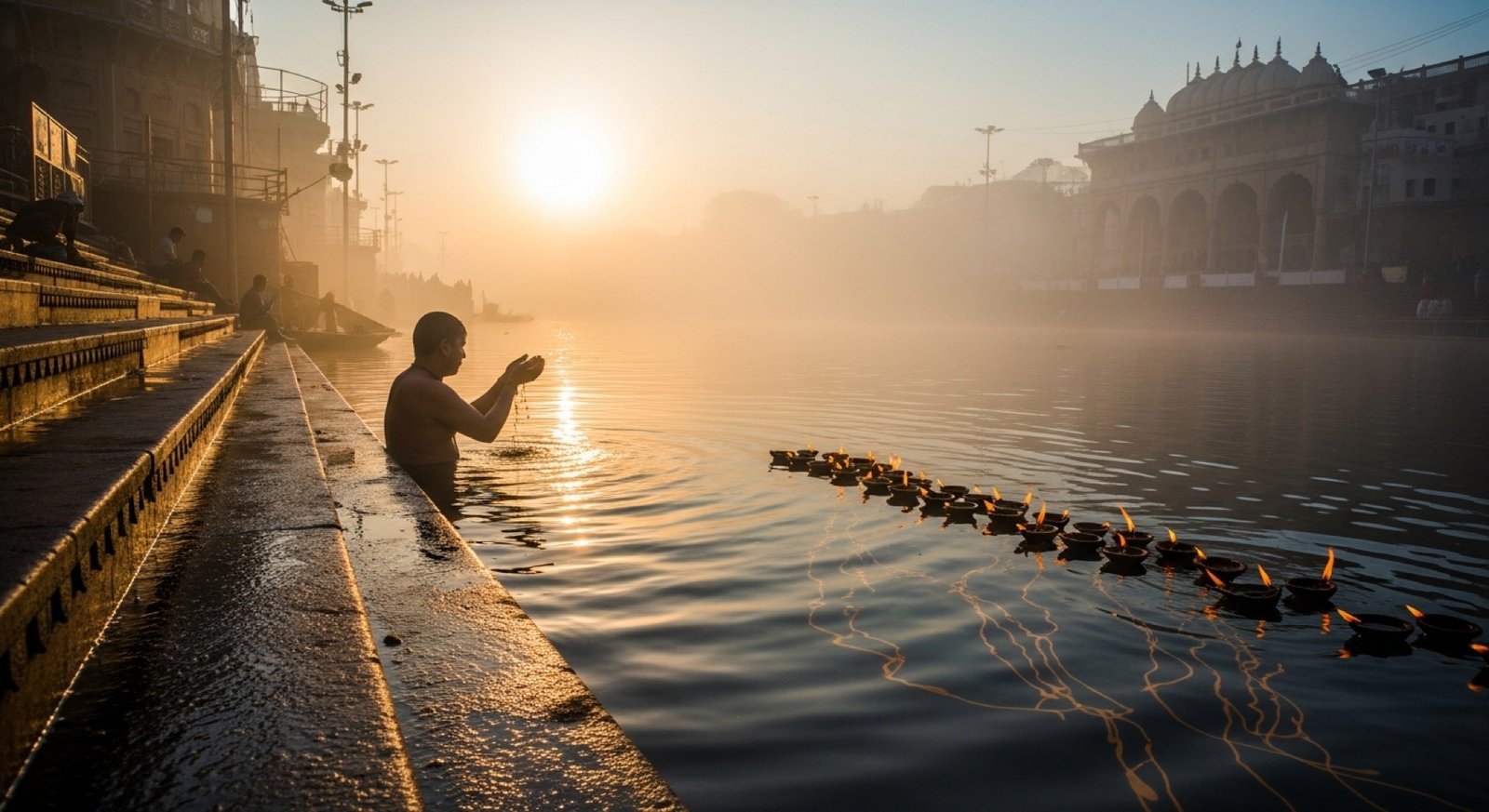
The principal ghat where Amrit fell into Brahma Kund. Venue for the Shahi Snan and the nightly Ganga Aarti. A stone here bears the Vishnupada.

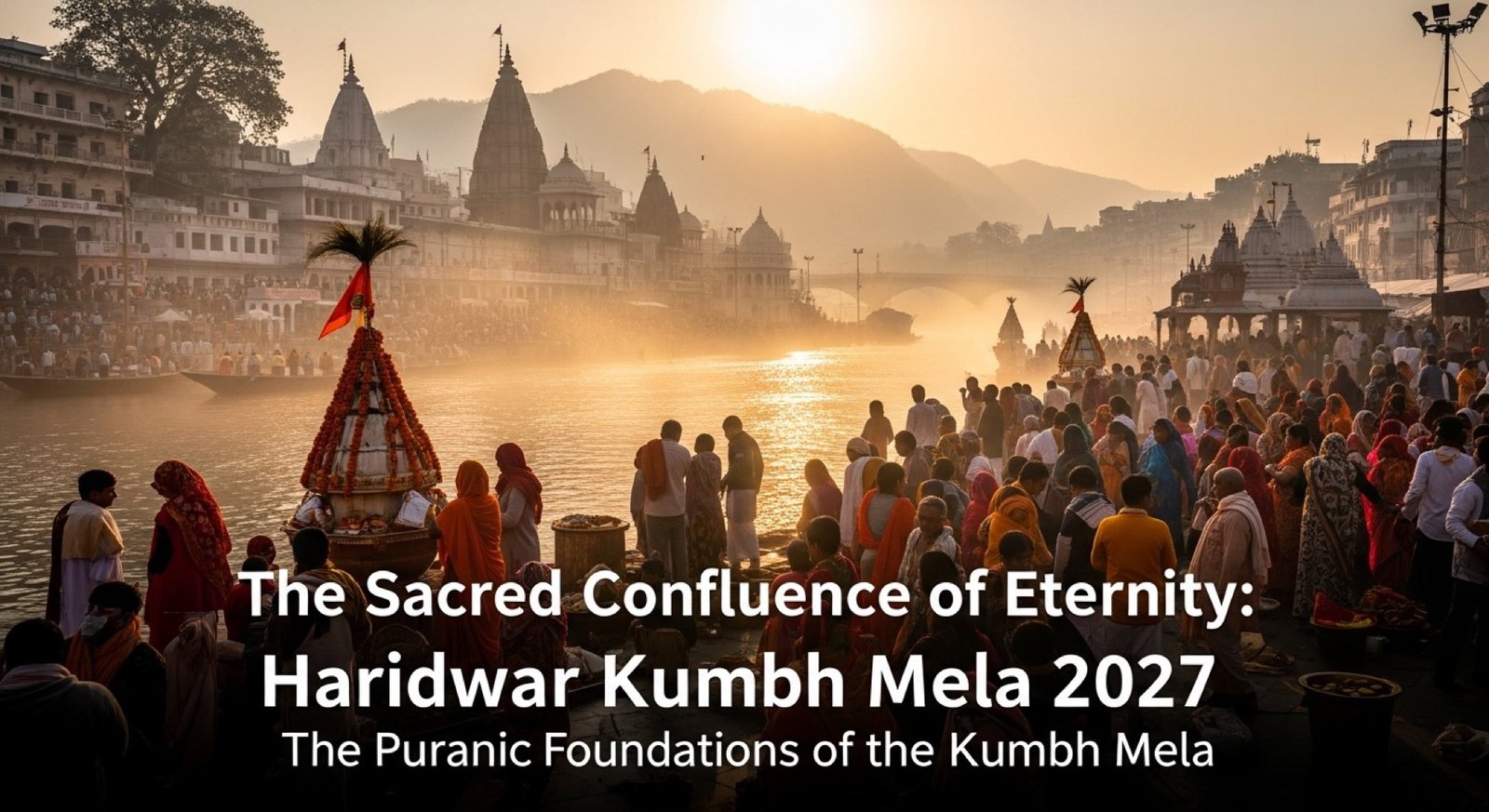
The Sacred Confluence of Eternity
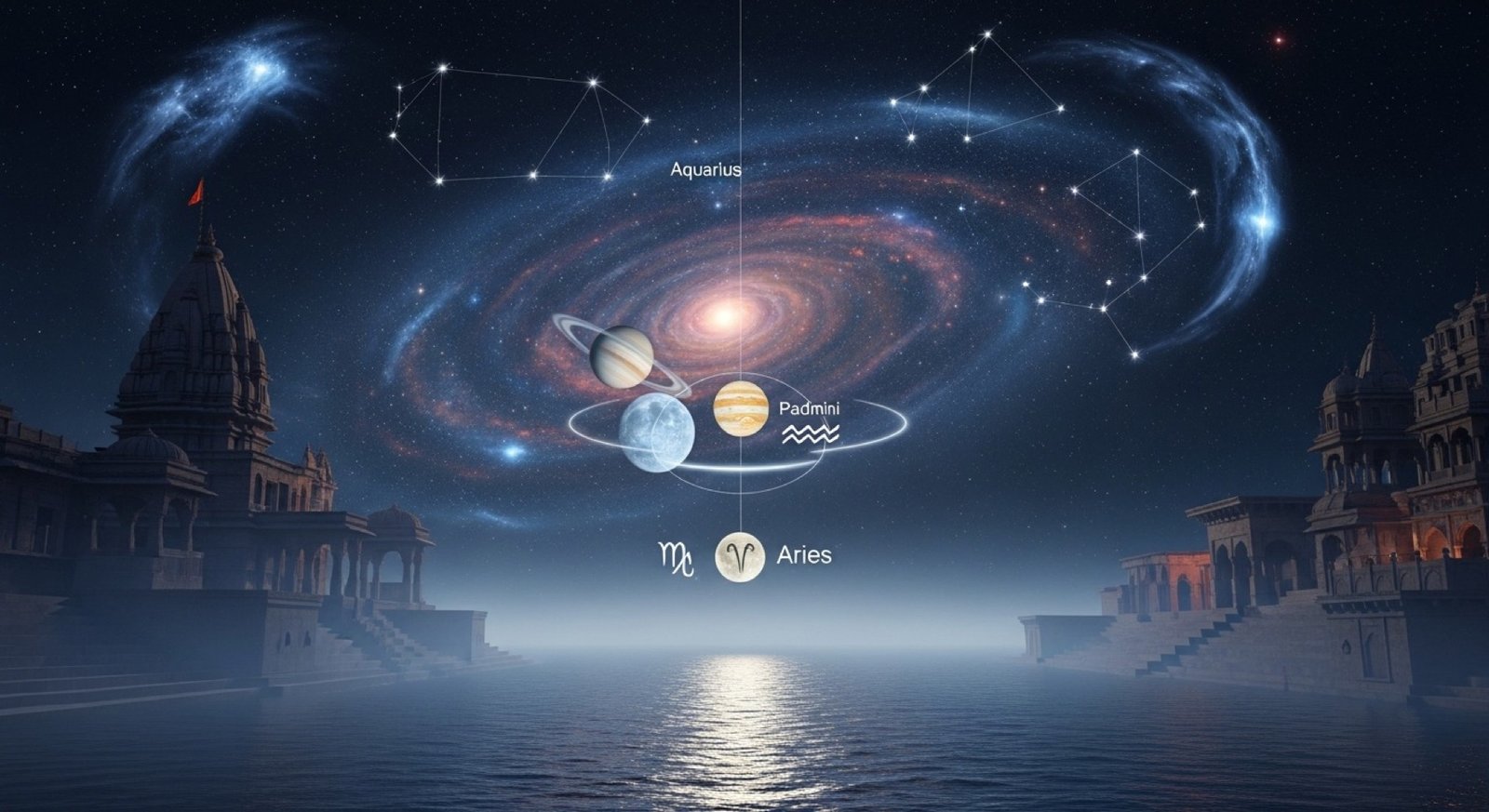
The 2027 Ardh Kumbh at Haridwar unfolds from Makar Sankranti (January 14) to Chaitra Purnima (April 20), peaking on Mesh Sankranti, April 14, 2027, when Jupiter is in Aquarius and the Sun enters Aries. Three Shahi Snans, the processions of fourteen Akharas, and the full Panch Tirth circuit, all on the banks of Ganga Ma at Har Ki Pauri.
Ten major bathing dates are scheduled across the four-month window. Three of these are Shahi Snans (Royal Baths), when the fourteen Akharas have the first right to enter the Ganges in ceremonial procession. Pilgrims follow after.
| Date | Tithi / Day | Significance |
|---|---|---|
| Jan 14, 2027 | Makar Sankranti | Sun enters Capricorn - festival commences |
| Feb 6, 2027 | Mauni Amavasya | Silent new-moon bath, universally auspicious |
| Feb 11, 2027 | Basant Panchami | First day of spring, dedicated to Saraswati |
| Mar 6, 2027 | Mahashivratri | 1st Shahi Snan (Royal Bath) |
| Mar 8, 2027 | Phalgun Amavasya | 2nd Shahi Snan |
| Mar 14, 2027 | Ram Navami | Birth of Lord Rama |
| Apr 14, 2027 | Mesh Sankranti - Baisakhi | 3rd Shahi Snan - PEAK DAY (Sun enters Aries) |
| Apr 20, 2027 | Chaitra Purnima | Festival concludes |
Rows highlighted in saffron are Shahi Snan days. Mesh Sankranti (April 14) is the astrological peak of the entire 2027 cycle.
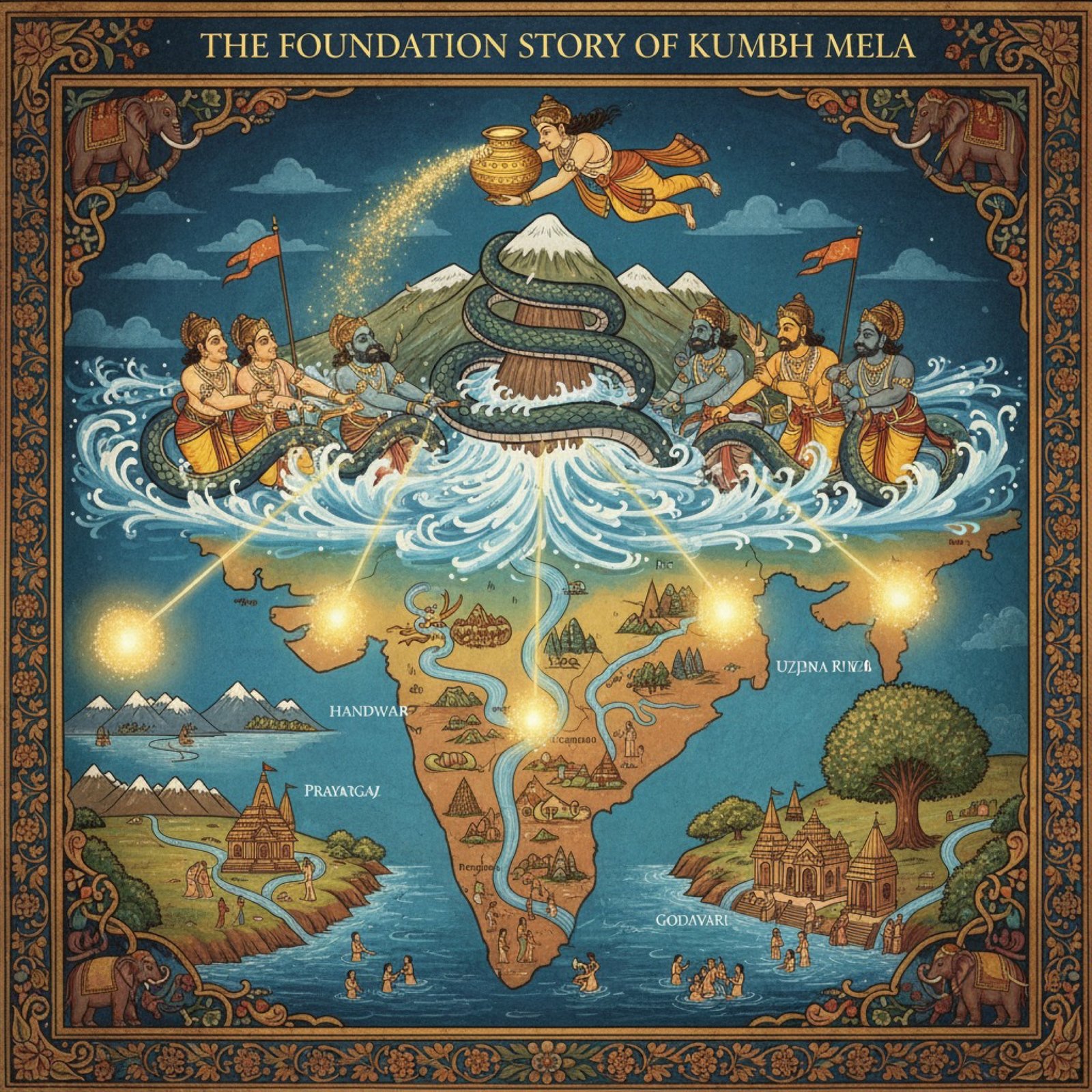
The Kumbh is rooted in the Samudra Manthan, the churning of the ocean of milk described in the Bhagavat, Vishnu, and Skanda Puranas. To recover the Amrit (nectar of immortality), the Devas and Asuras churned the ocean together. When Lord Dhanvantari emerged holding the Amrit Kumbh, Jayanta - son of Indra - seized the pitcher and fled. The chase lasted twelve divine days.
During the flight, drops of Amrit fell at four earthly locations - Haridwar, Prayagraj, Nashik-Trimbakeshwar, and Ujjain. The Skanda Purana emphasises that the Kumbh is celebrated specifically where the nectar spilled, not merely where the pot rested. Bathing in the Ganges at Haridwar during the right astrological window reopens that cosmic window of liberation.
"Gange cha Yamune chaiva Godavari Saraswati, Narmade Sindhu Kaveri jale-asmin sannidhim kuru."
- Snan Mantra. "O Holy Rivers Ganga, Yamuna, Godavari, Saraswati, Narmada, Sindhu, and Kaveri, manifest your presence in this bath water."
A pilgrimage to Haridwar during the Kumbh is not considered complete without visiting the Panch Tirth. Together they form a spiritual triangle protected by three Siddha Peethas.
The principal ghat where Amrit fell into Brahma Kund. Venue for the Shahi Snan and the nightly Ganga Aarti. A stone here bears the Vishnupada.
Spiritually significant for Pind Daan (ancestral rites). Quieter than Har Ki Pauri; ideal for solo ritual.
Site of the Daksha Yajna where Sati self-immolated. A foundational Shaktipeeth narrative.
Hilltop Siddha Peetha on Bilwa Parvat. Mansa Devi grants wishes; a ropeway provides step-free access for seniors.
On the Sivalik ridge. Honours Chandi Devi, slayer of Shumbha and Nishumbha. Accessible by ropeway.
The Akharas are monastic orders formalised by Adi Shankaracharya in the 8th century to protect temples and teachings. Today they organise the Kumbh's spiritual programme through the Akhil Bharatiya Akhara Parishad (ABAP). Thirteen are officially recognised; the fourteenth, the Kinnar Akhara (transgender sadhus), participates under Juna.
Devotees of Shiva. Famous for Naga Sadhus - ash-smeared warrior-ascetics who lead the Shahi Snan processions.
Devotees of Vishnu, especially Rama and Hanuman. Custodians of Hanumangarhi (Ayodhya) and the Ram Janmabhoomi tradition.
Founded on the teachings of Sri Chand (son of Guru Nanak) and Guru Gobind Singh. A synthesis of Vedic philosophy and Sikh tradition.
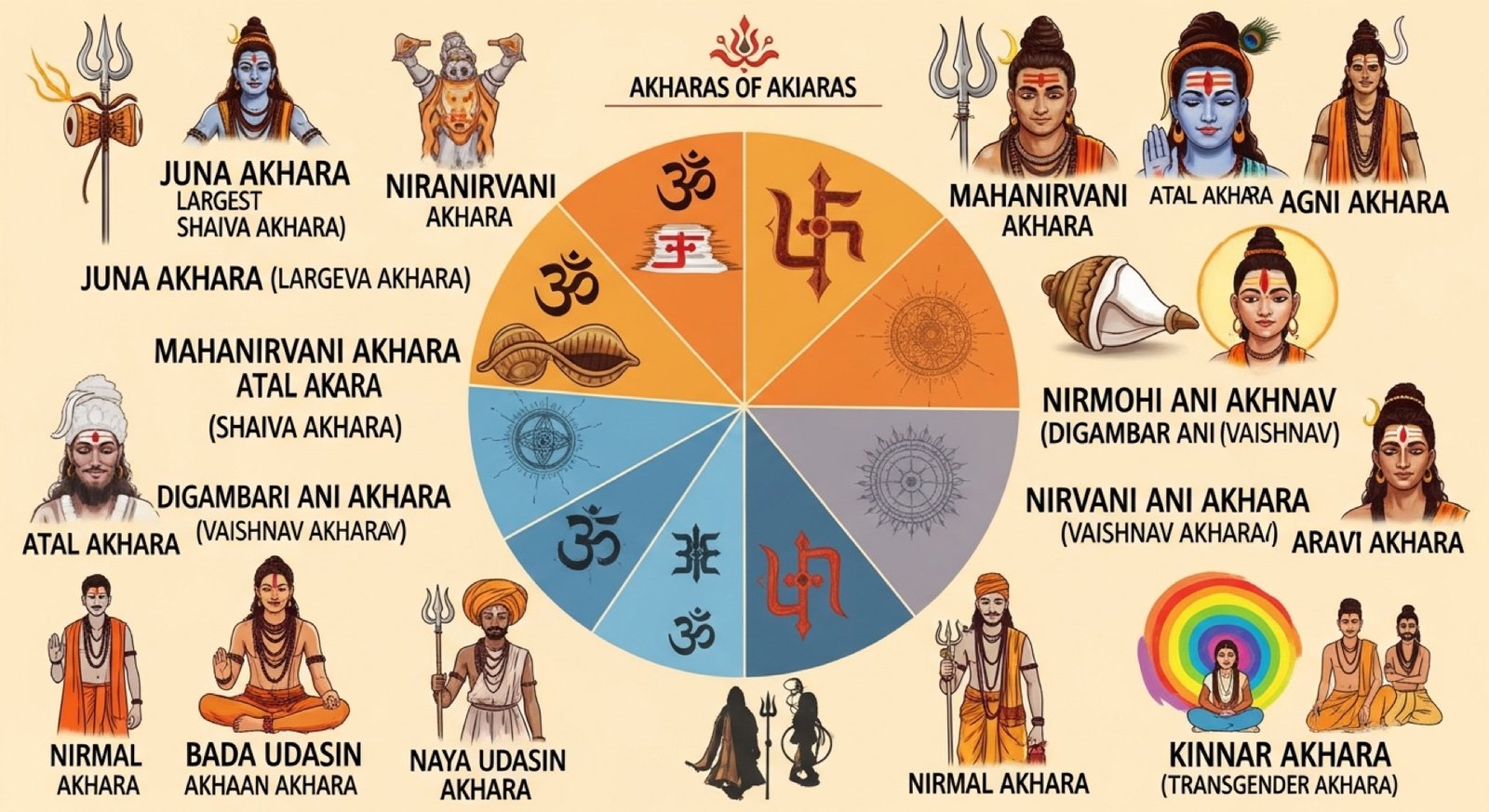
After the 1760 and 1796 Haridwar clashes between Shaivite and Vaishnavite sadhus, British colonial authorities codified the Shahi Snan sequence in 1780 to minimise conflict. It stands to this day:
The processions, called Peshwai, feature silver chariots, elephants, flagbearers, and Naga Sadhus performing traditional martial arts. Crowds shower flowers as the Mahamandaleshwars pass.
A small gallery of documentary photography from previous Kumbh Melas - Naga Sadhus, aerials of the Sangam, the Shahi Snan procession, and the Ganga Aarti at night. Images: Tanbir Aurid Photography (licensed).
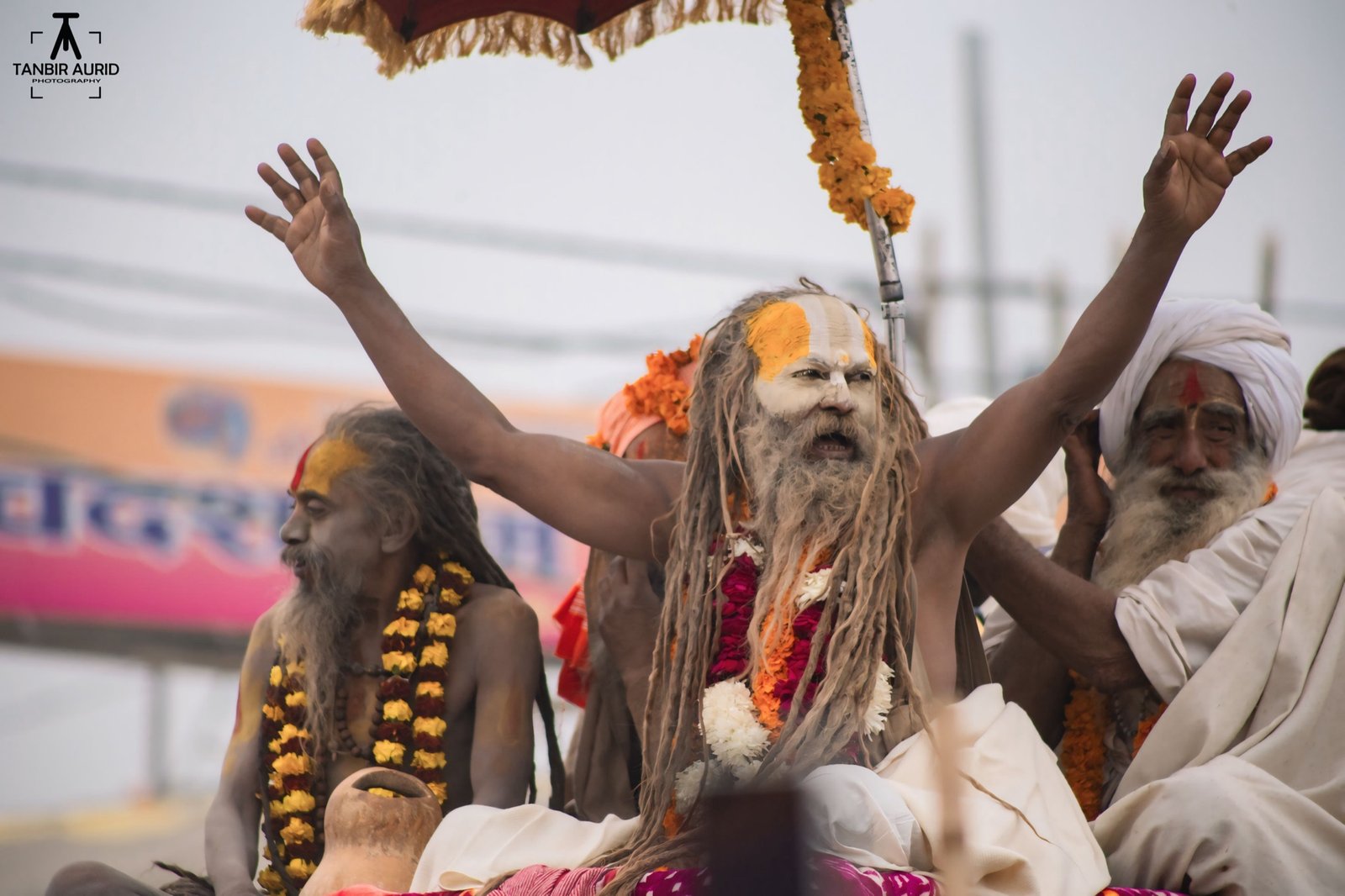
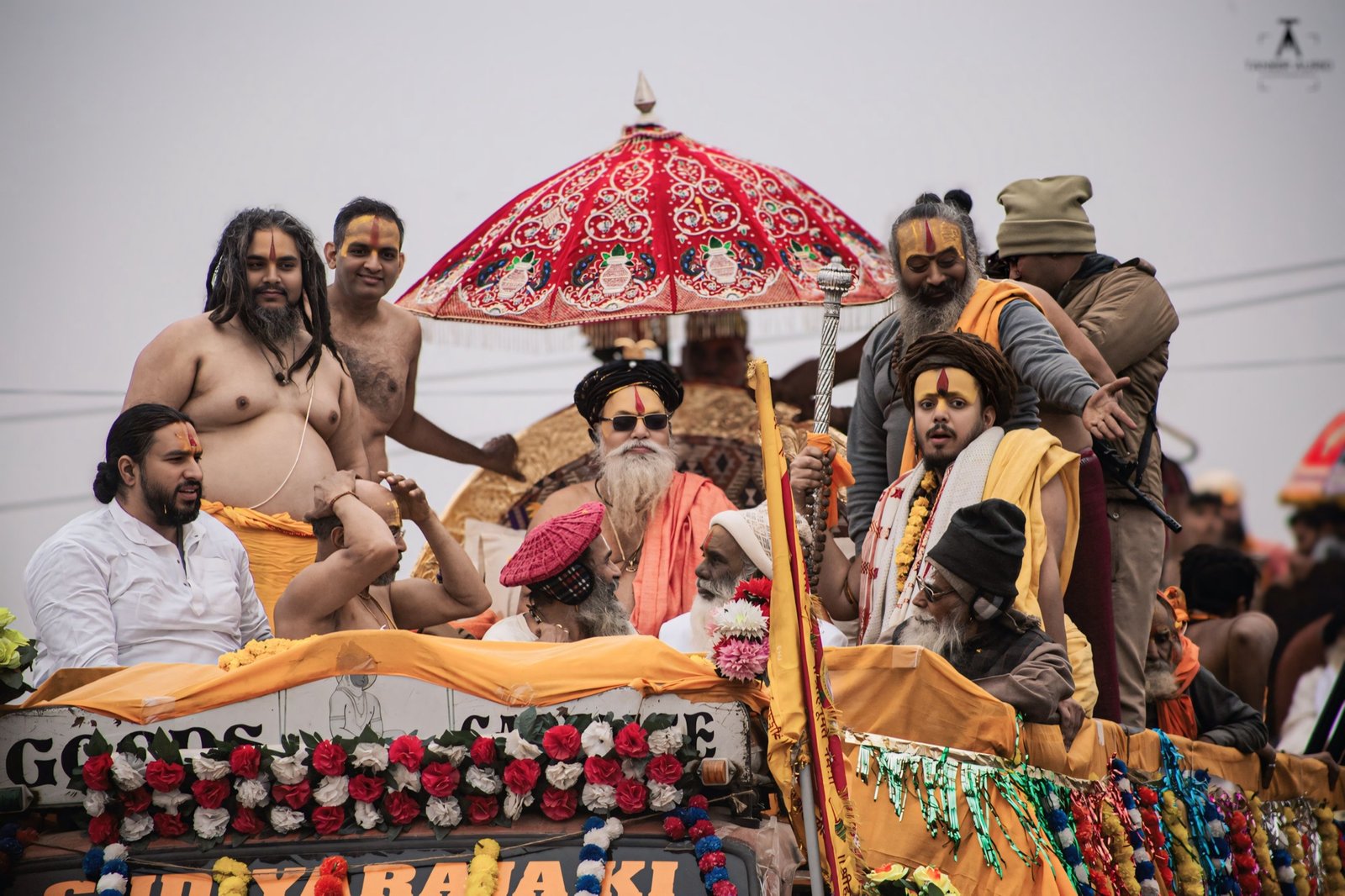
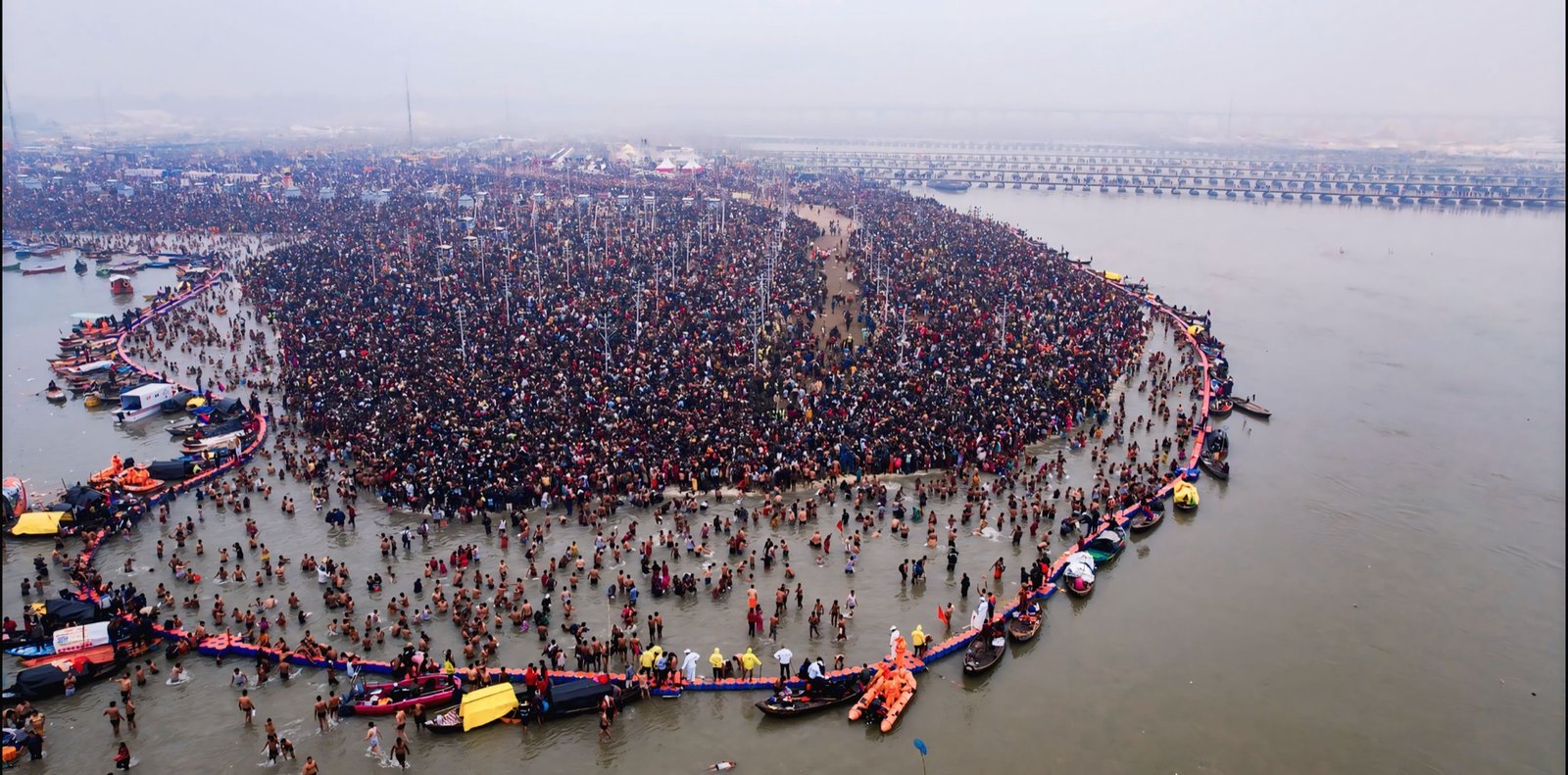
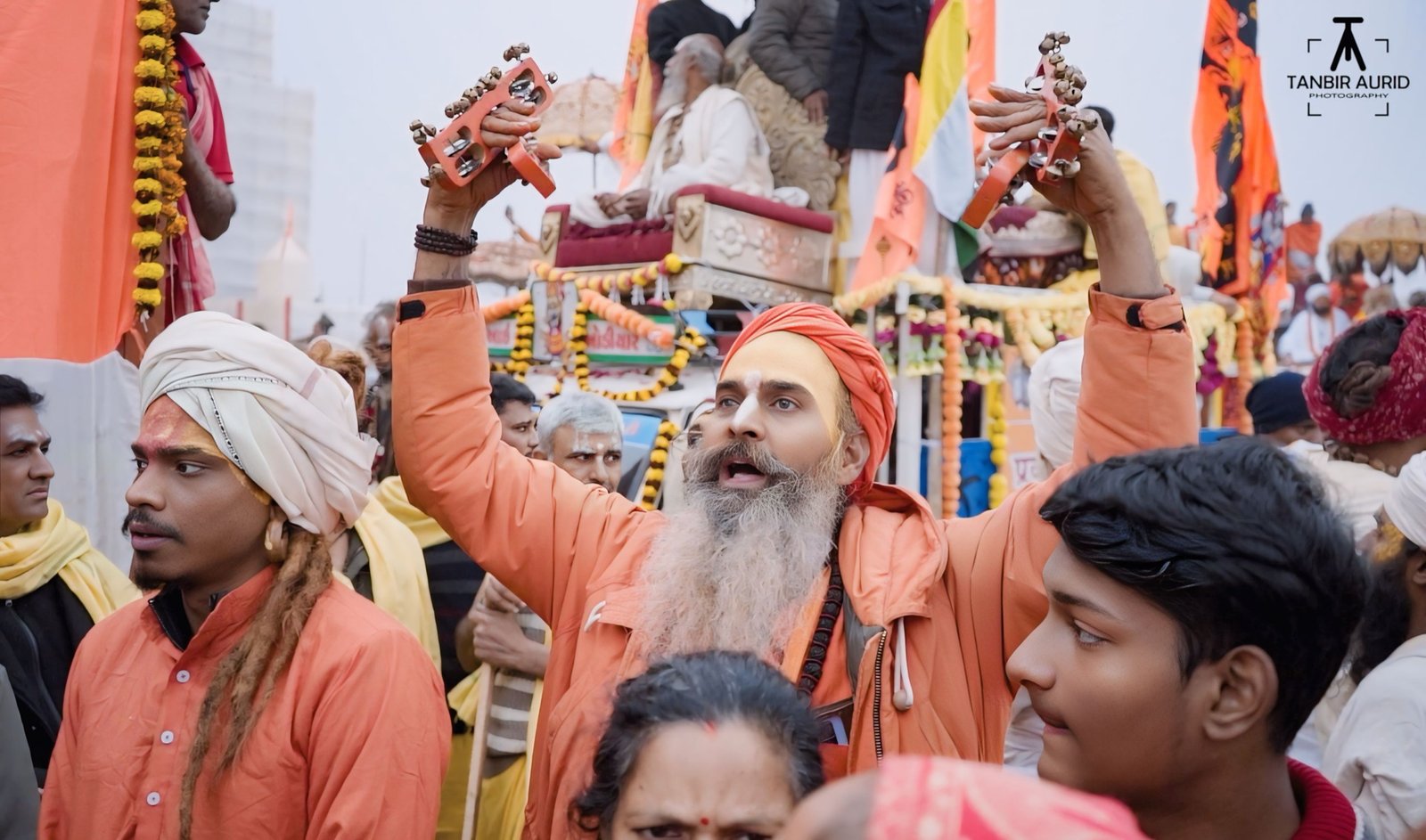
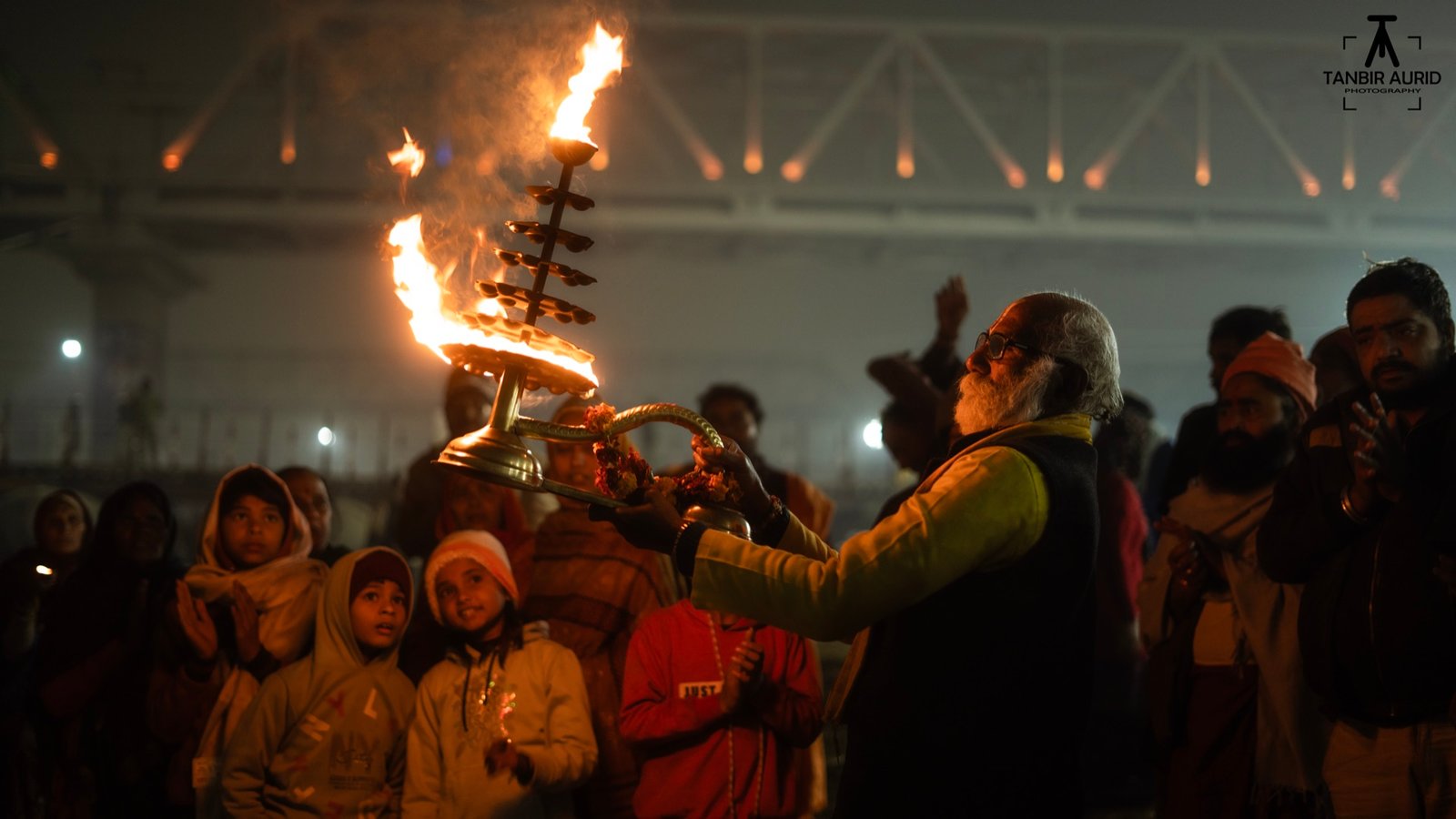
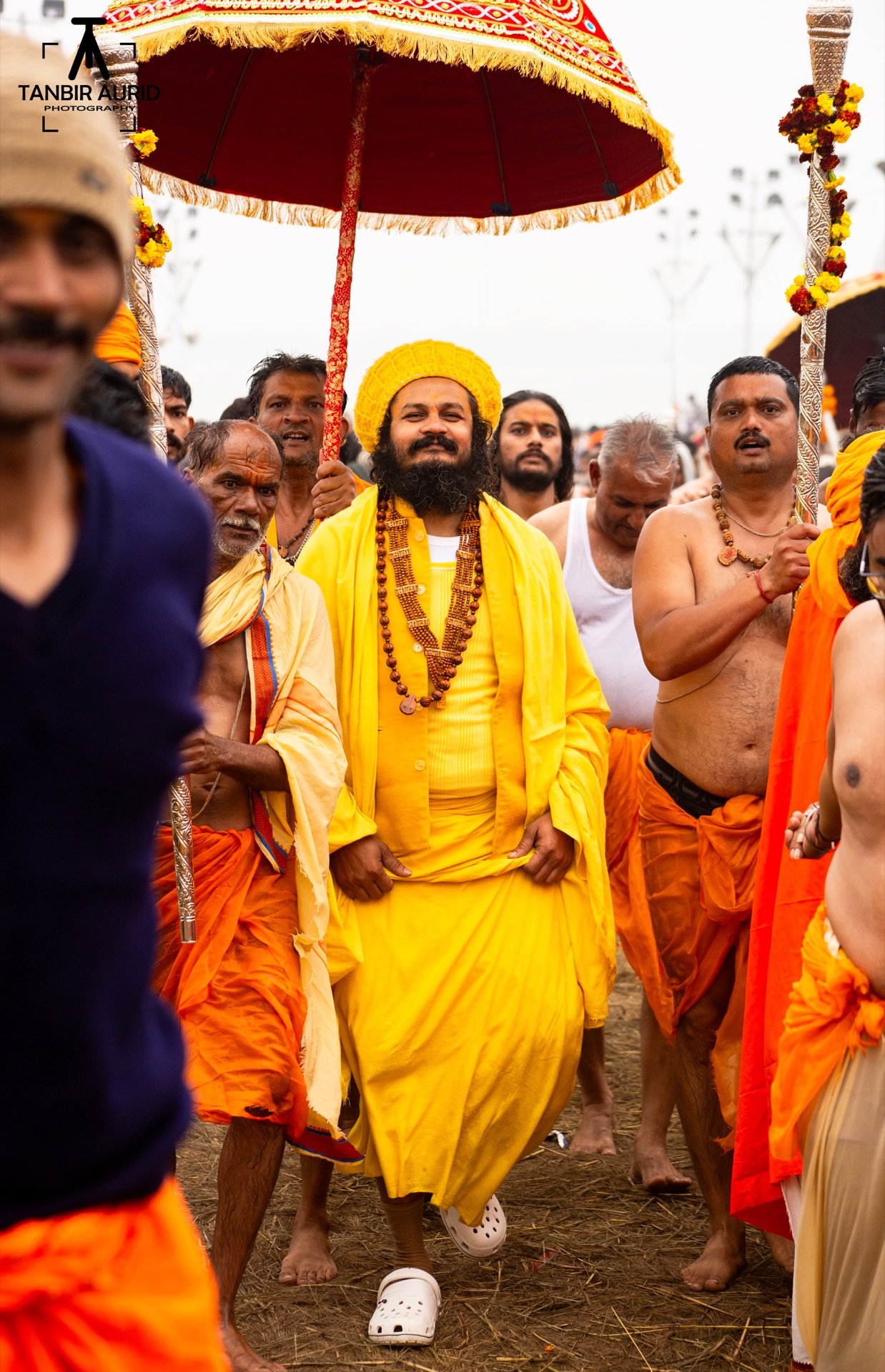
Haridwar and Dehradun sit 55 km apart. A two-day Kumbh visit pairs naturally with Saffron Chariot's 5-Night 6-Day Char Dham helicopter package departing from Sahastradhara helipad in Dehradun. The combined itinerary covers a Shahi Snan at Har Ki Pauri followed by Yamunotri, Gangotri, Kedarnath, and Badrinath - all four dhams in under a week, with VIP darshan included at each.
Pilgrims flying in from outside Uttarakhand can connect through any of our origin-city routes:
For seniors and NRIs, helicopter access removes the high-altitude trekking at Kedarnath and the long road journey between the dhams. See our guides on Char Dham for seniors and NRI booking.
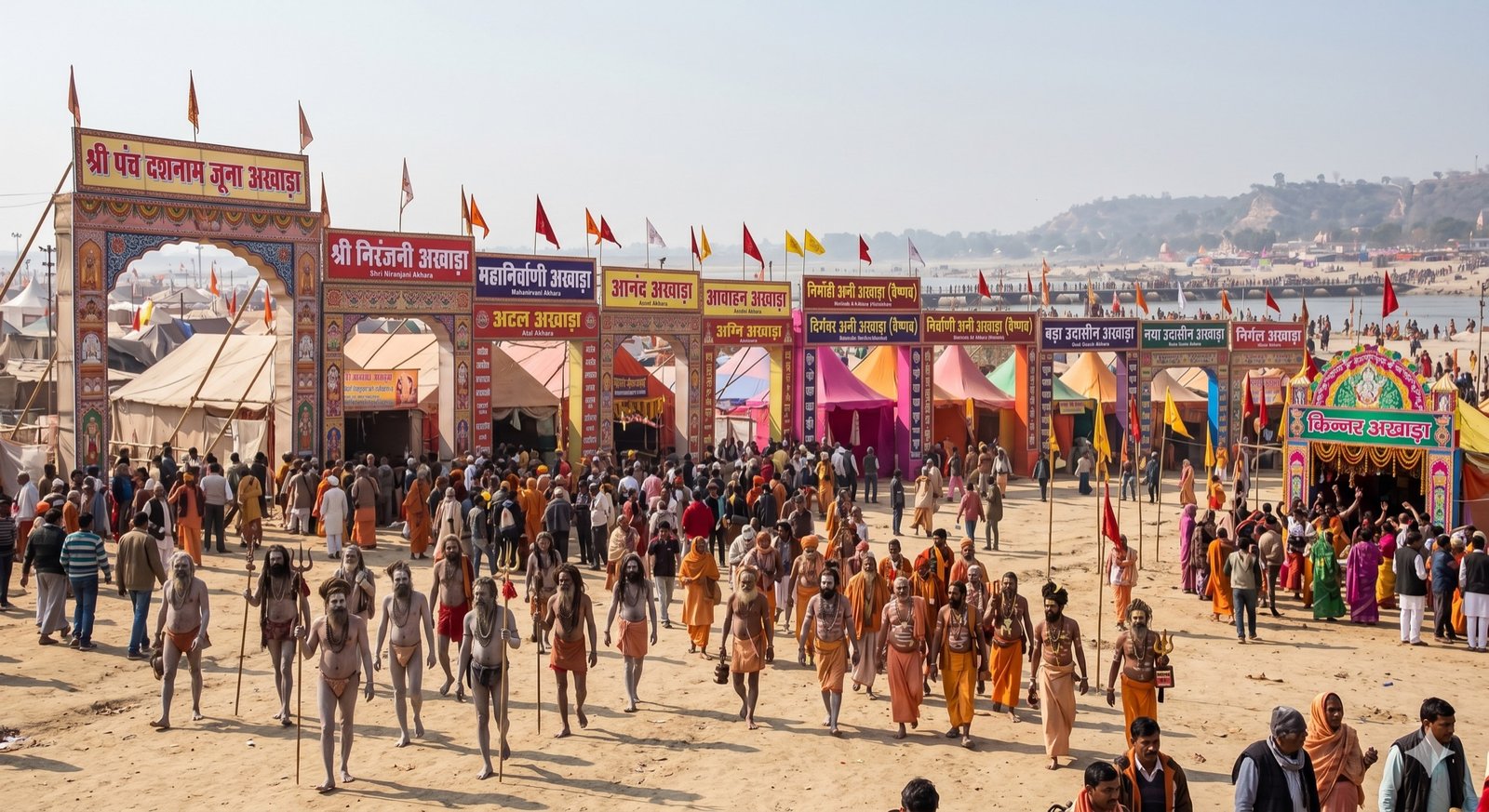
The Uttarakhand government has set an October 2026 completion deadline for all permanent infrastructure and is positioning the 2027 event as a "Digital and Divine" mega-gathering.
A new ₹50.27 crore CCR-2 facility acts as the brain of the Mela - real-time CCTV feeds, coordinated emergency response, and a helipad for medical evacuations.
Geospatial mapping of the 32 sectors plus AI-based stampede prediction on every ghat approach. Digital IDs and e-passes replace paper entry tokens.
Each sector has its own police outpost, hospital, and 150 residential camps for 25,000 pilgrims. Two new bridges over Sukhi River and the Mayapur escape channel ease movement.
Bike and boat ambulances for high-density periods. Civil Hospital, BHEL Hospital, and District Mela Hospital are integrated into the sector plan. 24/7 helpline: +91-1334-222725.
From Makar Sankranti (January 14, 2027) through Chaitra Purnima (April 20, 2027). Peak day is Mesh Sankranti, April 14, 2027.
Mahashivratri (March 6), Phalgun Amavasya (March 8), and Mesh Sankranti / Baisakhi (April 14). April 14 is the most spiritually potent.
The Purna Kumbh at each of the four cities runs on a 12-year cycle. The Ardh (half) Kumbh falls six years later. The astrological window is equally potent; in 2027 the state has declared the event will be held at Purna Kumbh scale.
Yes. 2027 uses mandatory digital registration, e-passes, and sector entry. Check the official Divya Haridwar Kumbh portal for the latest guidance.
Yes. Two days at Haridwar for darshan and a Shahi Snan, followed by a 5-Night 6-Day helicopter Char Dham yatra from Dehradun, is a common 2027 itinerary. See the 5N6D package.
Yes, with caution. The administration has added bike/boat ambulances, senior-priority queues, and reduced waiting times. Pilgrims over 65 or with comorbidities should avoid the peak days. Helicopter access removes the physical strain of road journeys.
Har Ki Pauri, Kushavart Ghat, Kankhal (Daksheswara Mahadev), Bilwa Tirth (Mansa Devi), and Neel Parvat (Chandi Devi). Together they are the five essential sites of a Haridwar pilgrimage.
"Gange cha Yamune chaiva Godavari Saraswati, Narmade Sindhu Kaveri jale-asmin sannidhim kuru." It invokes the seven holy rivers to manifest in the bath water.
Options range from the government's 150 temporary camps (25,000-pilgrim capacity) through Akhara dharamshalas and established hotels in Haridwar and Rishikesh. Book 6-12 months ahead for Shahi Snan dates.
Yes. The Kumbh welcomes non-Hindu and international pilgrims. Multilingual information kiosks are planned. Foreigners have previously been initiated as Mahamandaleshwars after years of practice under an Akhara.
Quick enquiry
Tell us your dates and group size - we reply within 30 minutes during business hours (Mon-Sun, 9 AM - 8 PM IST). Or WhatsApp us on +91 86799 66676.
Share dates and group size. Our team replies within 2 business hours with availability, pricing tiers, and a written quote.
Our Pilgrims Trust Saffron Chariot
Head Office: C-52, Shri Ram Nagar, Jwalapur, Haridwar, Uttarakhand 249407, Bharat
Helipad: Sahastradhara Helipad, Dehradun
Operations: Yamunotri · Gangotri · Kedarnath · Badrinath
WhatsApp or call for fastest response.
We answer all booking queries within 30 minutes.
WhatsApp Us ·
+91 86799 66676
sales@saffronchariot.com
Follow for yatra updates & pilgrim stories
Mon - Sun: 9:00 AM - 8:00 PM IST
Season: April - November
Response time: Under 30 minutes on WhatsApp
Recognised by Tourism Ministry (Uttarakhand) · DGCA-Compliant Aviation Partners · 6 Seasons · 4,000+ Pilgrims Served