
South India · Tamil Nadu · Andhra Pradesh
Pancha Bhoota Stalam
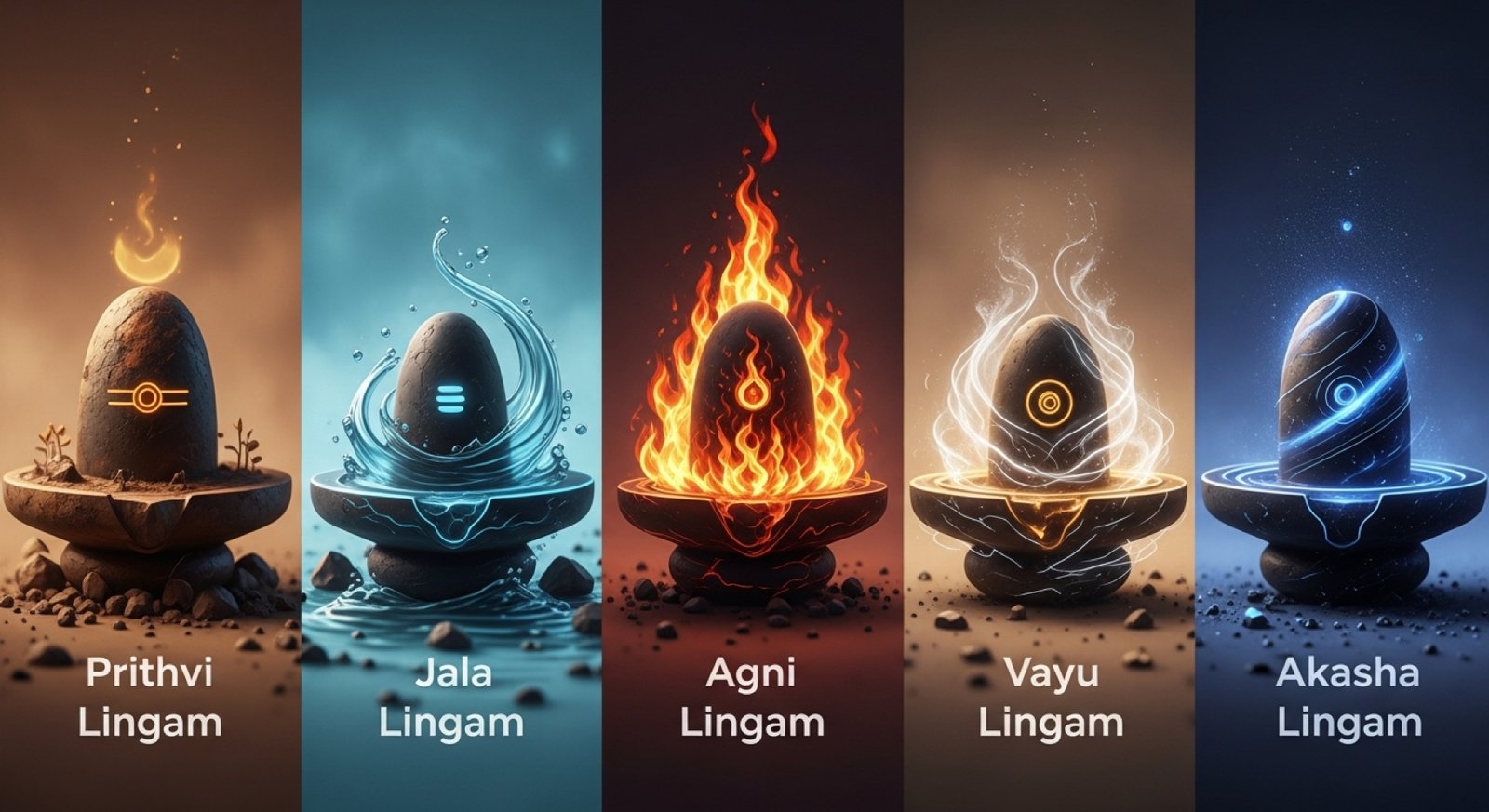
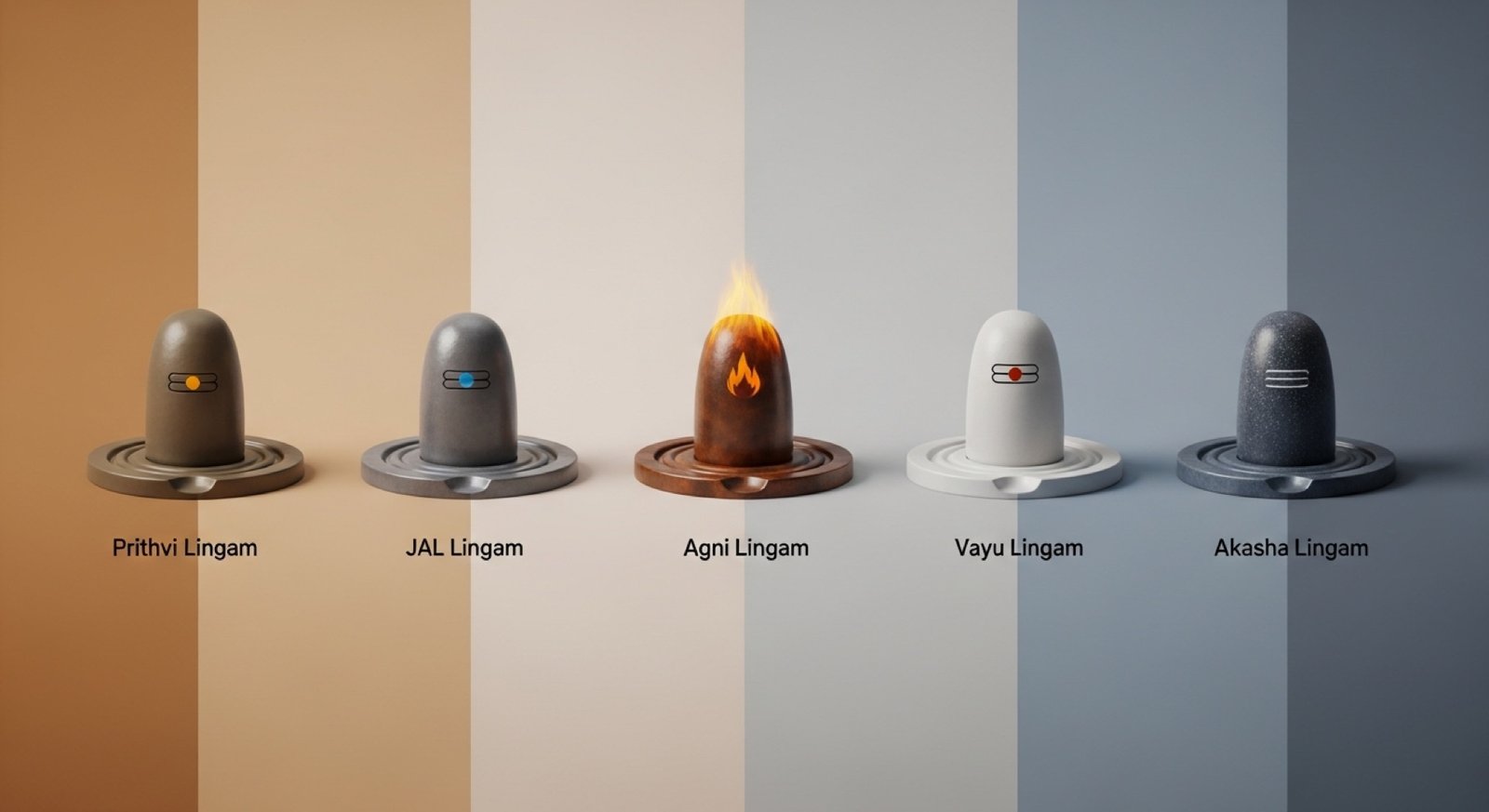
Five Shiva temples. Five elements. One meridian. The Pancha Bhoota Stalam are the terrestrial anchors for Prithvi (Earth), Appu (Water), Agni (Fire), Vayu (Air), and Akasha (Space) - five temples constructed over 1,500 years by different dynasties that together map the cosmology of Hindu thought onto the geography of South India.
The cosmology of the five elements
In Vedic and Vedantic thought, the material universe is composed of five maha-bhootas - Earth, Water, Fire, Air, and Space. The universe begins in pure consciousness, first manifests as Space, then sequentially densifies into Air, Fire, Water, and Earth. The human body is a microcosm of the same pattern - and the equilibrium of these five forces is the basis of both Ayurveda and the spiritual path to liberation.
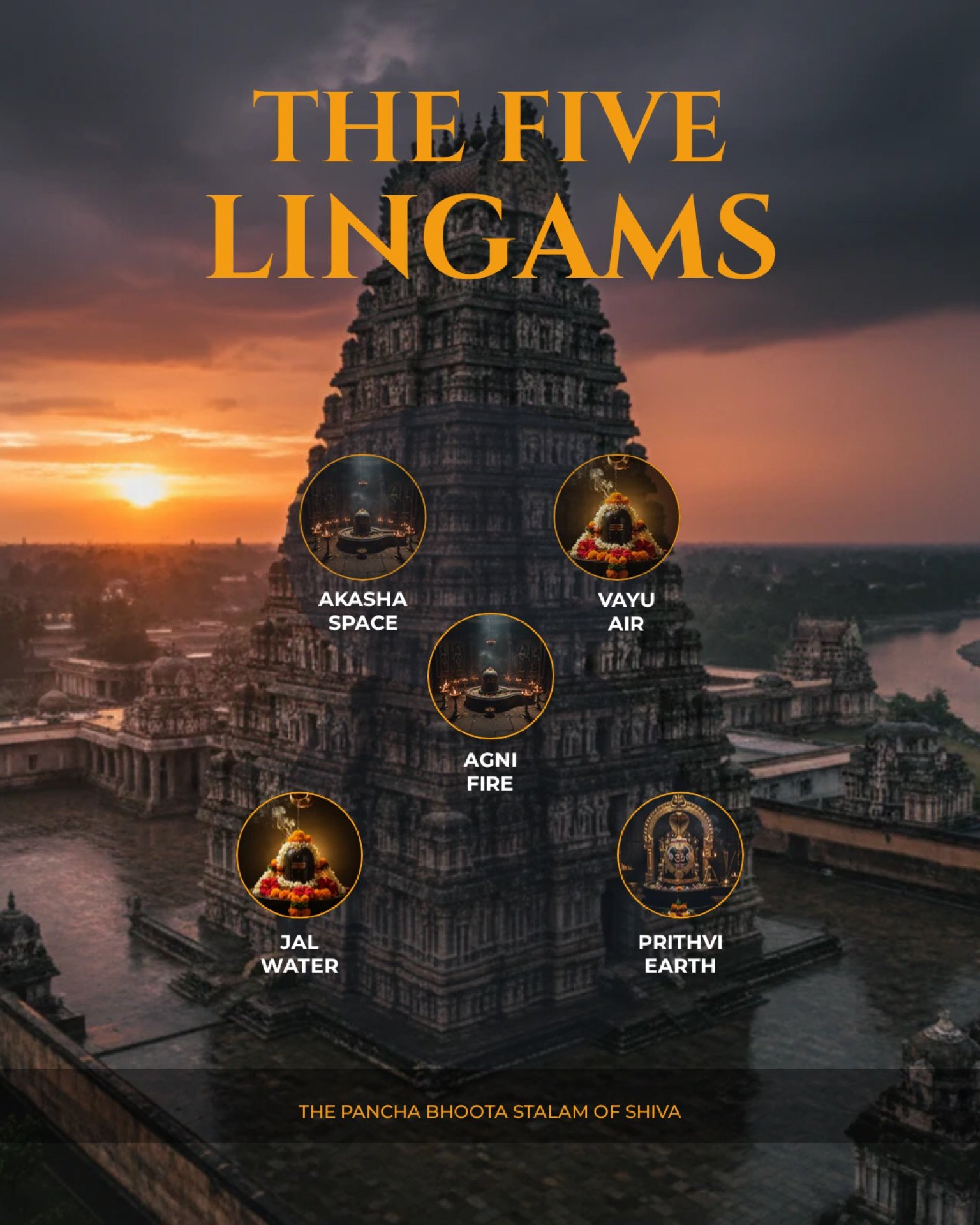
Each of the five temples encodes its element in a physical signature visible in the sanctum itself: a sand Lingam that would dissolve if not protected, a Lingam submerged in an underground spring, a whole hill that is the Agni Lingam, a flickering lamp that pulses without wind, and an empty space behind a curtain of gold Bilva leaves.
Rabindranath Tagore, in his essay Pancha Bhoota, argued that the emotional faculty of the human mind is sensitive to the effects of these elements - light, sound, speed - and that they are inseparable from the celestial bodies. The temples turn that sensitivity into pilgrimage.
| Element | Sanskrit Tattva | Manifestation | Temple | Location | State |
|---|---|---|---|---|---|
| Earth | Prithvi | Prithvi Lingam (sand) | Ekambareswarar | Kanchipuram | Tamil Nadu |
| Water | Appu / Jalam | Appu Lingam (submerged) | Jambukeswarar | Thiruvanaikaval | Tamil Nadu |
| Fire | Agni / Tejas | Agni Lingam (hill itself) | Arunachaleswarar | Thiruvannamalai | Tamil Nadu |
| Air | Vayu | Vayu Lingam (swayambhu camphor) | Srikalahasteeswarar | Srikalahasti | Andhra Pradesh |
| Space | Akasha | Akasha Lingam (empty space) | Thillai Nataraja | Chidambaram | Tamil Nadu |
Earth · Prithvi
Ekambareswarar Temple, Kanchipuram
Earth is stability, strength, fertility. At Ekambareswarar, the Lingam itself is made of sand - and must be covered in silver to protect it from deterioration.
The sthala purana says Goddess Parvati performed austerities under a mango tree on the banks of the Vegavati River to atone for once playfully closing Shiva's eyes and plunging the universe into darkness. She shaped a Shiva Lingam from wet soil and sat beside it. Shiva tested her with fire (deflected by Vishnu and the moon's rays) and with flood (the Vegavati overflowed). In a moment of absolute surrender, Parvati embraced the fragile sand Lingam with her body to protect it. Shiva appeared and agreed to reside there as the Prithvi Lingam - and earned the name Tazhuva Kuzhainthaar, "the one who melted in her embrace."
The Sthala Vriksha - a mango tree believed to be over 3,500 years old - stands in the courtyard. Its four branches represent the four Vedas; it yields four distinct varieties of fruit. The deity's name, Ekambareswarar, means "Lord of the Mango Tree" (Eka + Amra + Iswarar).
| Feature | Detail |
|---|---|
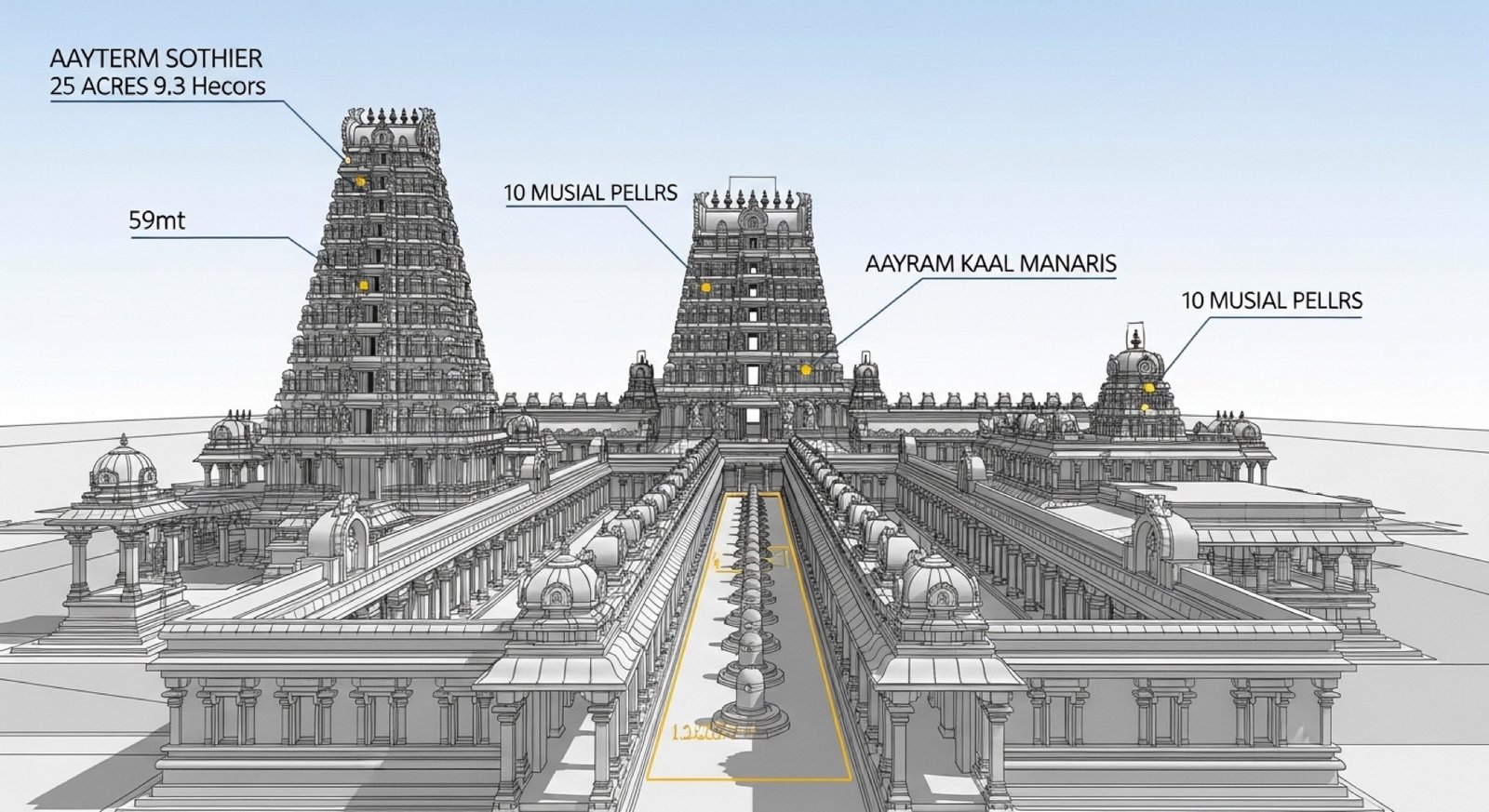
| Complex size | 25 acres (one of the largest in India) |
| Tallest gopuram | 59 m southern tower, 11 storeys (Krishnadevaraya, 16th c.) |
| Notable hall | Aayiram Kaal Mandapam - the 1,000-pillared hall |
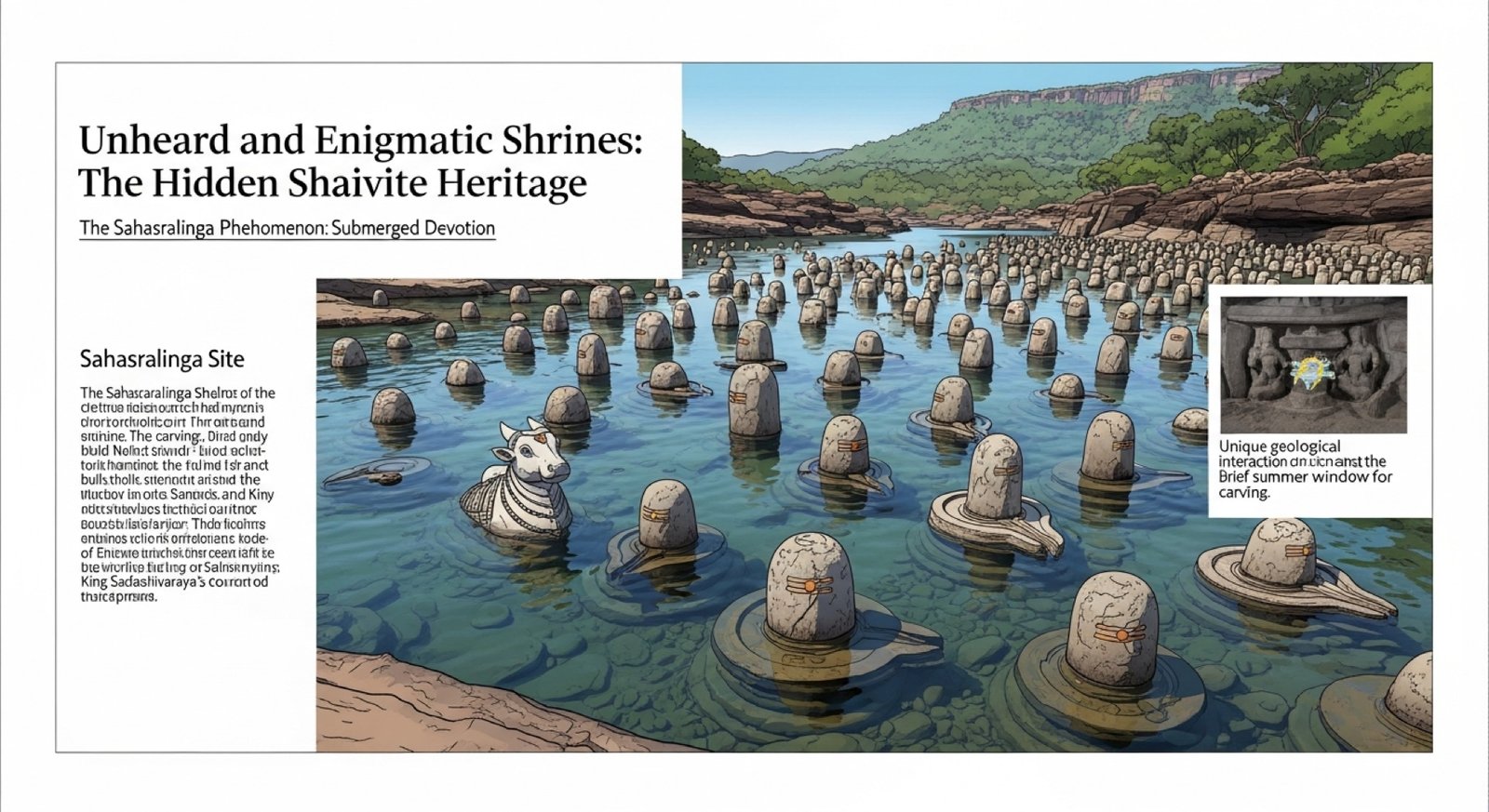
| Inner symbols | 1,008 miniature Lingams in the corridor; the Sahasra Lingam stone (1,000 lingas on one rock) |
| Acoustic feature | 10 musical pillars, each yielding a distinct note |
| Major festival | Panguni Brahmotsavam (March-April) - the divine marriage of Shiva and Parvati |
Water · Appu / Jalam
Jambukeswarar Temple, Thiruvanaikaval
At Jambukeswarar, the Water element is not symbol but presence. The sanctum is fed by a perennial underground spring that keeps the Shiva Lingam partially submerged - even at the peak of summer. During rain, the sanctum floods.
Parvati once mocked Shiva's austerities and was sent to earth to perform her own penance. She found the Jambu (plum) forest by the Cauvery, fashioned a Lingam from river water, and meditated. When Shiva finally appeared, he did so not as a husband but as a Guru - to teach her the Shiva Gnana, ultimate knowledge. Because of this unique Guru-Sishya dynamic, the temple is one of the few Shiva temples where the Kalyanotsavam (marriage ceremony) is not performed. The deities face each other rather than stand side by side. At the noon puja, the priest dresses as a woman and performs the rituals as the Goddess worshipping her Lord.
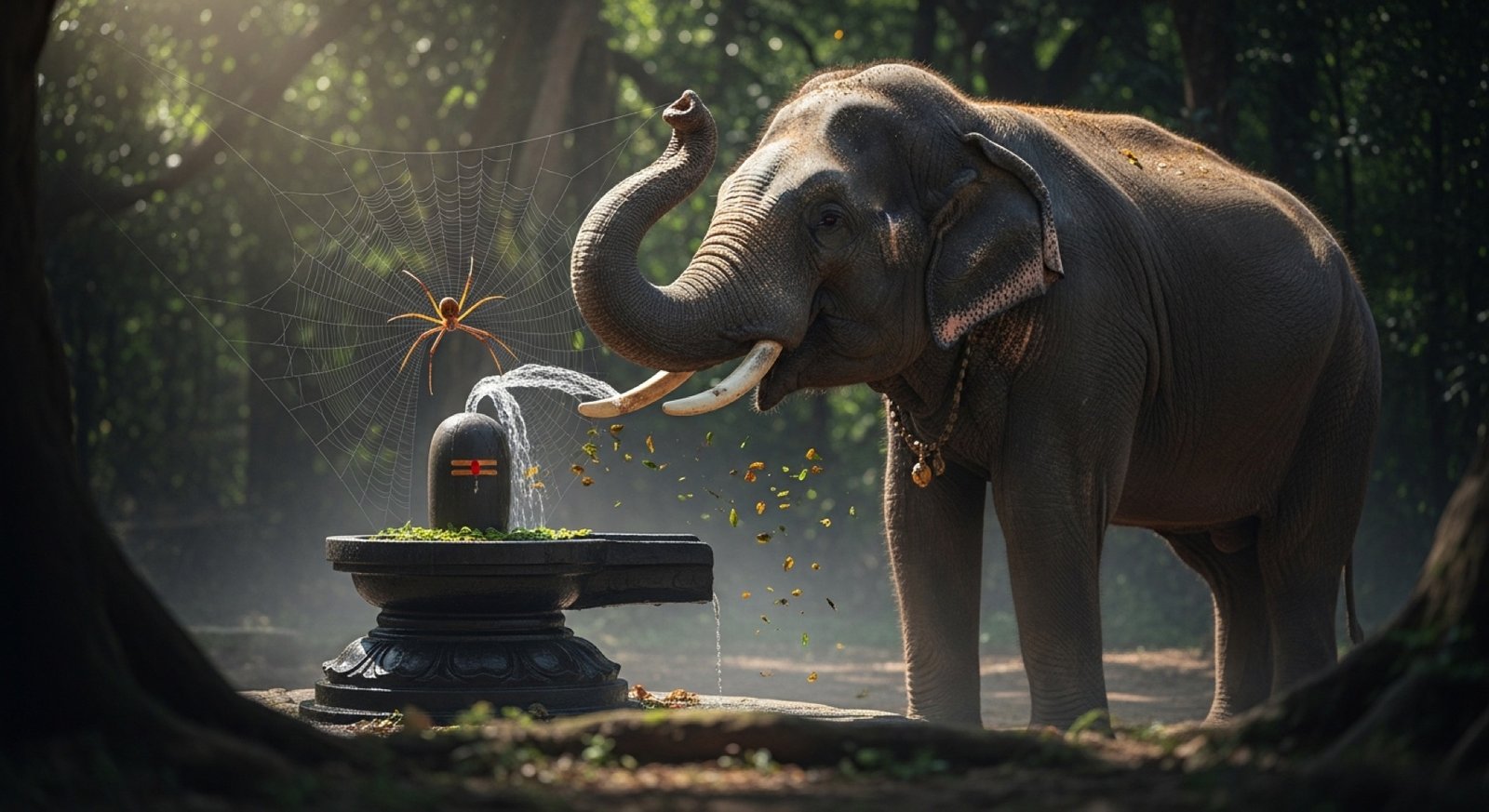
The city's name, Thiruvanaikaval, means "the forest of the holy elephant." The legend: two of Shiva's ganas, Malyavan and Pushpadanta, were cursed to be born as a spider and an elephant. Both worshipped the Appu Lingam - the elephant bringing water daily, the spider spinning a protective web against falling leaves. The elephant, mistaking the cobweb for dust, kept destroying it with water. Eventually the spider crawled into the elephant's trunk and bit it, killing both. Shiva, moved by their mutual devotion, lifted the curse. The spider was reborn as the Chola king Kochengot Chola, who built the temple with a deliberately four-foot-high entrance so no elephant could ever enter the sanctum again.
| Feature | Detail |
|---|---|
| Built by | King Kochengot Chola, approx. 1,800 years ago |
| Enclosures | Five concentric prakaras |
| Vibhuti Prakara | The 5th enclosure wall: over 1 mile long, 25 ft high, 2 ft thick. Legend says Shiva himself helped build it. |
| 4th prakara | Hall of 796 pillars |
| Main tank | Potramarai Kulam - water with reputed medicinal properties |
| Sanctum feature | Underground spring; Lingam remains partly submerged year-round |
Fire · Agni / Tejas
Arunachaleswarar Temple, Thiruvannamalai
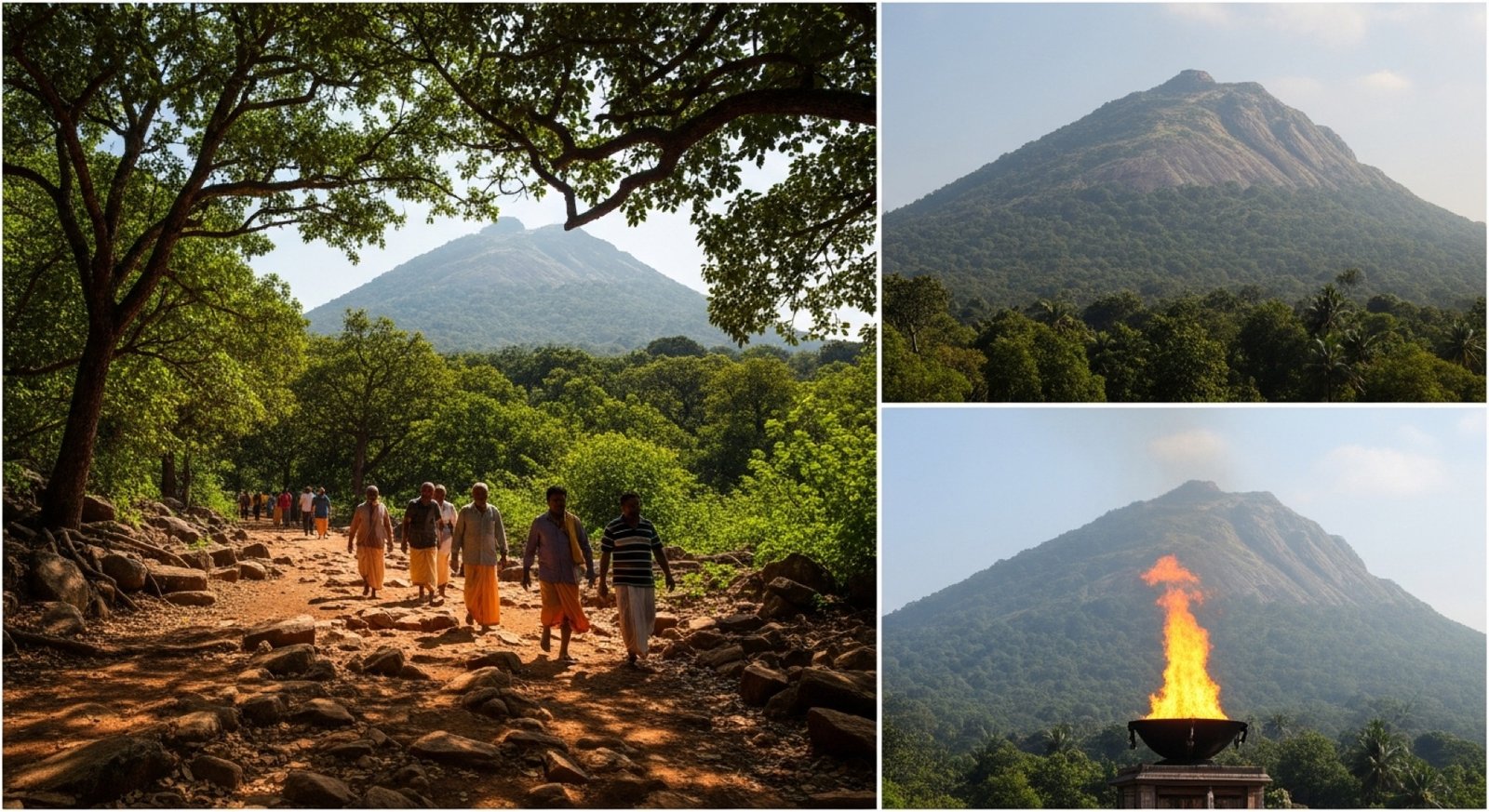
Fire is transformation - the burning of the ego, the light of knowledge that dispels ignorance. At Thiruvannamalai, the Agni Lingam is not a stone but an entire hill. The Arunachala is treated as a living embodiment of Shiva himself.
The Lingodbhava legend explains why. Brahma and Vishnu once argued over who was superior. To settle the matter, Shiva appeared as an infinite column of light. He challenged the two deities to find its top and bottom. Vishnu, as a boar, tunnelled into the earth; Brahma, as a swan, flew into the sky. Neither reached an end. Vishnu admitted defeat; Brahma lied, claiming a Ketaki flower had fallen from the top. Shiva cursed Brahma and the flower, and established himself as the supreme formless light.
Girivalam, the 14-kilometre barefoot circumambulation of the hill, is performed by tens of thousands of pilgrims on Purnima (full moon) nights. Along the path stand the Ashta Lingams, eight directional lingams. The annual Karthigai Deepam festival sees a giant cauldron of ghee lit atop the hill - a physical re-enactment of Shiva's manifestation as the original pillar of fire, visible for miles in every direction.
| Feature | Detail |
|---|---|
| Area | 25 acres |
| Rajagopuram (eastern tower) | 66 m tall, 11 storeys |
| Dynasties | Chola (9th c.), Sangama, Saluva, Tuluva |
| Main deity form | Agni Lingam (silver-plated) |
| Literary significance | Manikkavacakar composed the Tiruvempaavai here |
| Annual highlight | Karthigai Deepam - the giant ghee flame atop the hill |
Air · Vayu
Srikalahasteeswarar Temple, Srikalahasti (Andhra Pradesh)
Of the five, only Srikalahasti lies outside modern Tamil Nadu - in Chittoor district of Andhra Pradesh, on the banks of the Swarnamukhi River. Air is the life-force, prana, that sustains all living beings.
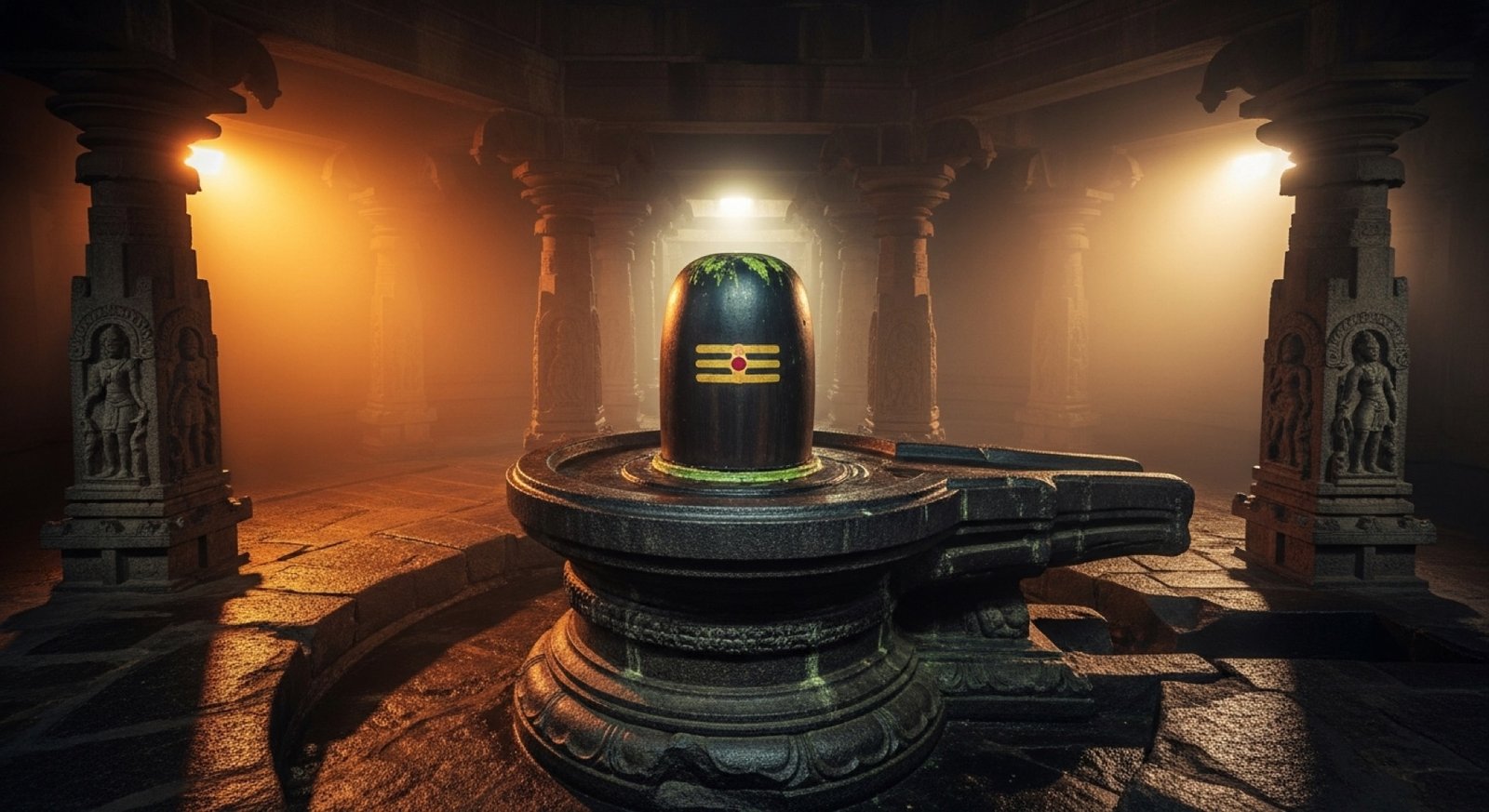
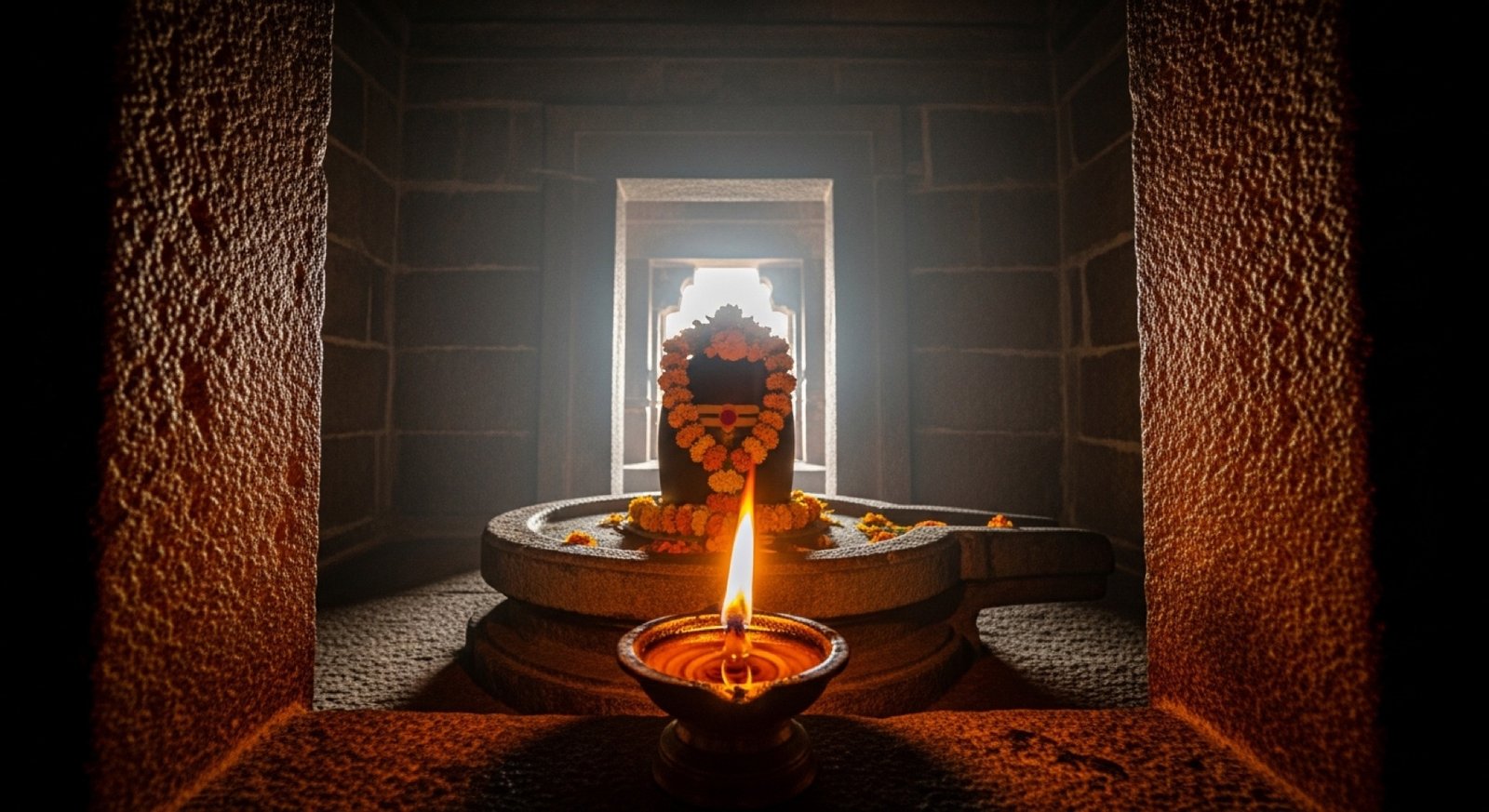
The signature of the element is a small oil lamp in the innermost sanctum. The chamber has no windows, and the entrance is largely blocked - yet the flame flickers constantly, as if fanned by a breeze. Pilgrims read this as the physical presence of the Vayu Lingam: the deity present in the very breath of creation.
The Lingam itself is Swayambhu - self-manifested - and is believed to be made of solidified raw camphor (pacha-karpuram). Vayu, the wind-god, is said to have performed penance to this camphor Lingam for millennia. Shiva granted him three boons: to be present everywhere as air, to exist in all living beings as prana, and to have the Lingam at this site named after him.
The name itself comes from three animals who worshipped the Lord here:
- Sri (spider) - wove a web over the Lingam to protect it.
- Kala (snake) - placed gems on the Lingam to adorn it.
- Hasti (elephant) - carried river water in its trunk and laid Vilva leaves.
Srikalahasti is also revered as Dakshina Kailasam and is a famous Rahu-Ketu Kshetra, where pilgrims perform rituals to alleviate the astrological effects of the shadow planets.
| Era | Contribution |
|---|---|
| 2nd-3rd c. BCE | Mauryan silver punch-marked coin recovered; evidence of worship from this period |
| 5th c. CE | Inner temple structure completed |
| 11th-12th c. CE | Chola renovations and gopurams (Rajendra Chola I) |
| 1516 CE | The 120-foot main gopuram built by Krishnadevaraya of Vijayanagara |
Space · Akasha
Thillai Nataraja Temple, Chidambaram
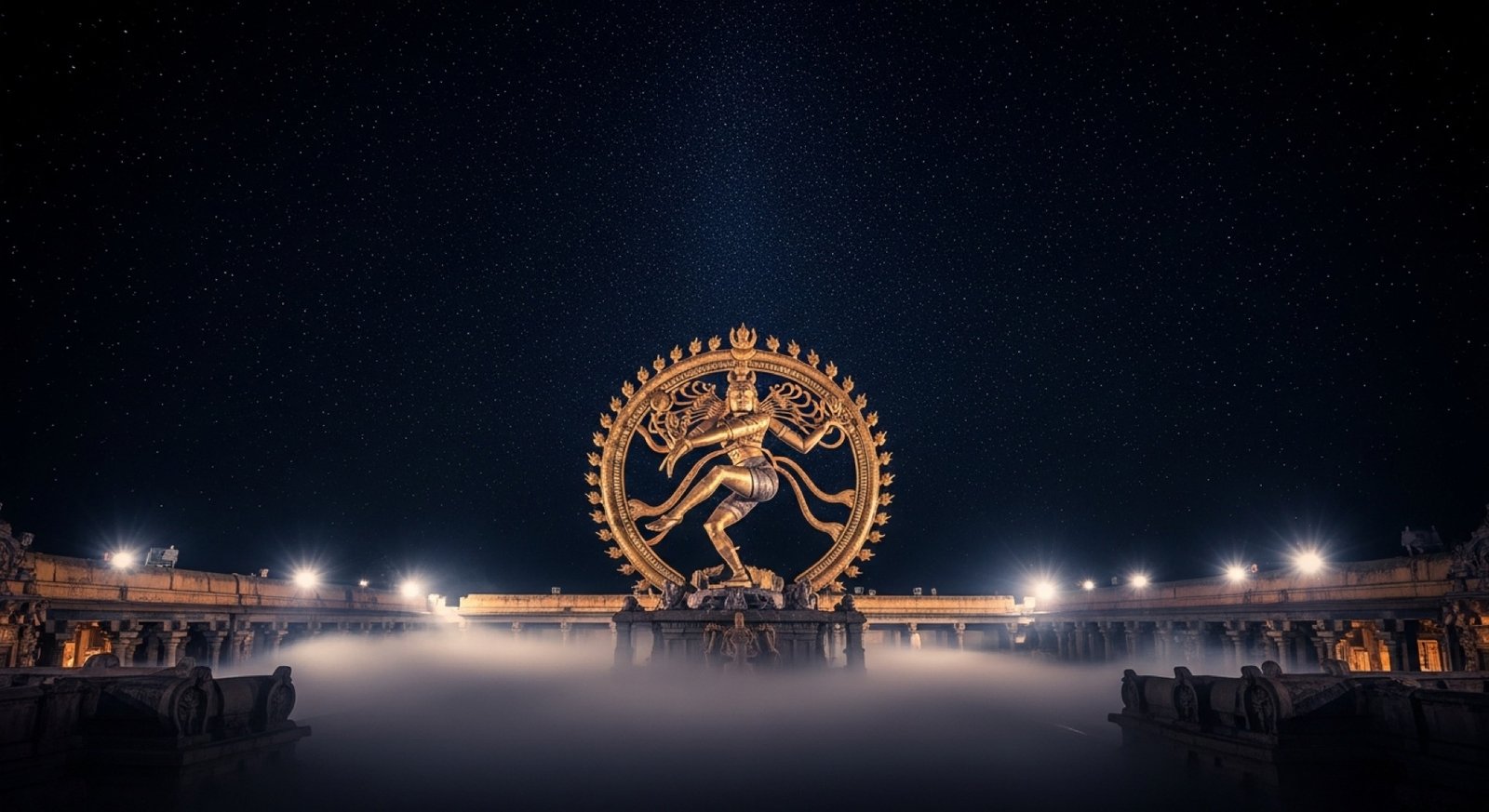
The most subtle of the five elements, Space is the all-containing void. At Chidambaram - a name meaning "the atmosphere of wisdom" or "clothed in consciousness" - Shiva is primarily worshipped not as a Lingam but as Nataraja, the cosmic dancer performing the Ananda Tandava, the Dance of Delight.
The deity is present in three forms here:
- Sakala Thirumeni - Nataraja in his physical, dancing form in the golden Kanaka Sabha.
- Sakala Nishkala Thirumeni - the crystal Lingam of Chandramauleswarar, a formless form.
- Nishkala Thirumeni - the Chidambara Rahasyam, "the secret of Chidambaram." Behind a black curtain adorned with golden Bilva leaves, an empty space. This is the Akasha Lingam: god as ultimate consciousness, formless and infinite - "the lotus heart of the universe."
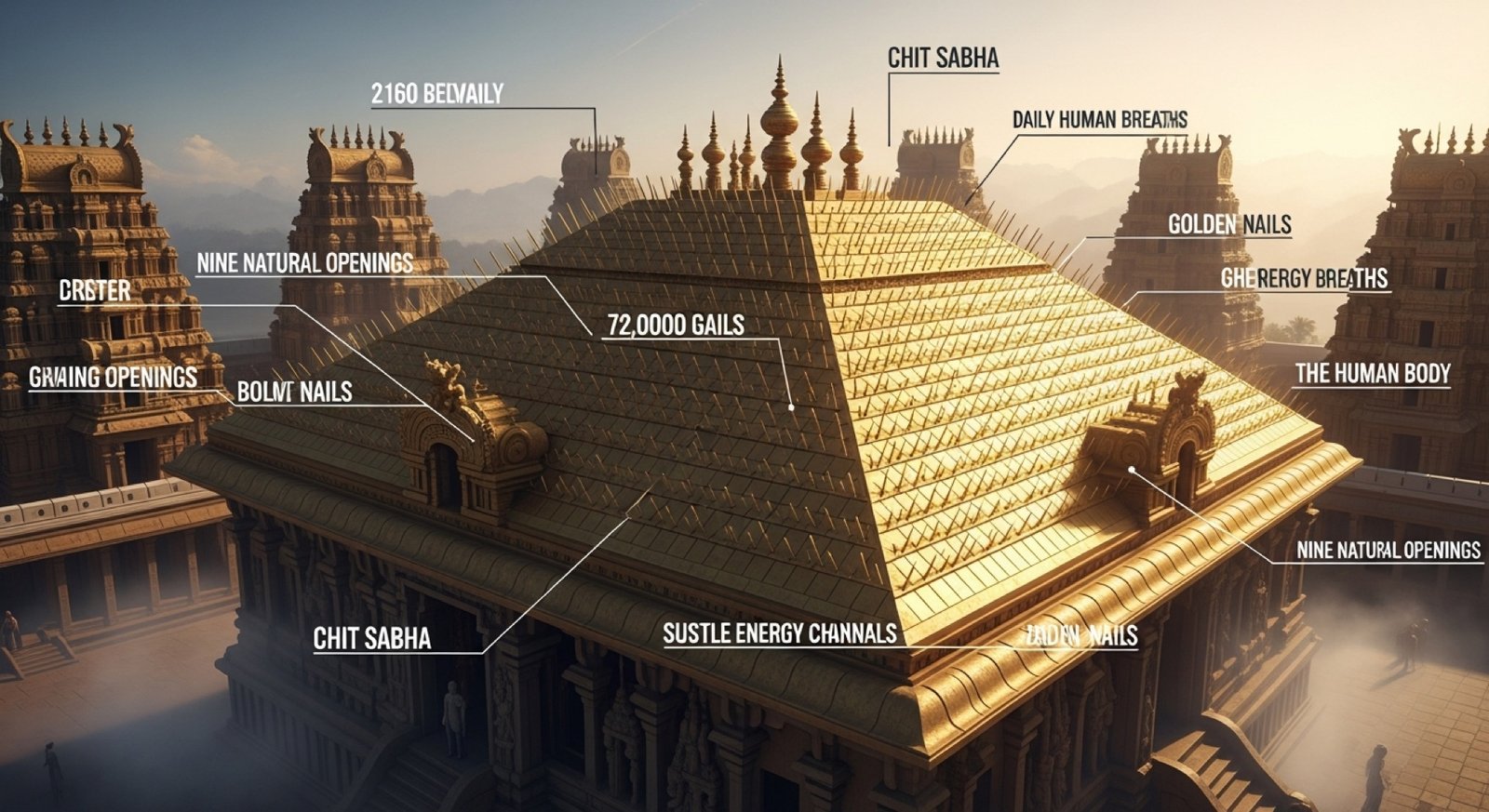
The architecture maps the human body onto the temple structure in a stunning act of symbolic engineering.
| Architectural symbol | Biological equivalent |
|---|---|
| 21,600 gold roof tiles (Chit Sabha) | Average breaths per day in a human |
| 72,000 golden nails | Number of nadis (subtle energy channels) |
| 9 gopurams (entrance gates) | 9 openings of the human body |
| Chit Sabha (roof) | The human heart/mind |
| Raja Gopuram (base) | The feet |
The temple is also a centre for the classical performing arts. Its walls carry carvings of all 108 karanas from the Natya Shastra - the foundational grammar of Bharatanatyam. The legend of the temple's founding centres on Shiva defeating Muyalakan, the demon of arrogance, in the Tillai forest, and installing the dance as the permanent expression of reality at this site.
The meridian alignment - a 1,500-year coincidence?
One of the deepest mysteries of the Pancha Bhoota Stalam is their geographical distribution. Four of the five temples sit in a narrow east-west band, with the fifth (Jambukeswarar) just under a degree to the west.
| Temple | Element | Longitude | Latitude |
|---|---|---|---|
| Ekambareswarar | Earth | 79 deg 42' E | 12 deg 50' N |
| Srikalahasti | Air | 79 deg 41' E | 13 deg 44' N |
| Chidambaram | Space | 79 deg 41' E | 11 deg 23' N |
| Arunachaleswarar | Fire | 79 deg 04' E | 12 deg 13' N |
| Jambukeswarar | Water | 78 deg 42' E | 10 deg 51' N |
The remarkable fact is not that five old temples happen to lie near each other. It is that they were constructed by different dynasties - Pallavas, Cholas, Vijayanagara - over a span of roughly 1,500 years, without the aid of modern surveying, satellites, or GPS. The consistency of the alignment has led historians and pilgrims alike to conclude that the ancient builders possessed a sophisticated working knowledge of geography and astronomy, and deliberately sited these shrines as "energy thresholds" along a specific meridian.
The claim that Chidambaram marks the centre of Earth's magnetic equator is pilgrim folklore, not peer-reviewed science. The longitudinal alignment itself, however, is measurable and well-documented.
Muthuswami Dikshitar's Pancha Bhuta Linga Kritis
In the 18th century, the Carnatic composer Muthuswami Dikshitar produced a definitive musical tribute to the five elements - one kriti (composition) for each temple. Each lyric incorporates both a raga mudra (a clue to the raga) and a kshetra mudra (the name of the temple) - technical signatures that mark these pieces as the composer's own.
| Element | Kriti | Raga | Kshetra |
|---|---|---|---|
| Earth | Chintaya Makanda | Bhairavi | Kanchipuram |
| Water | Jambupathe | Yamunakalyani | Thiruvanaikaval |
| Fire | Arunachalanatham | Saranga | Thiruvannamalai |
| Air | Sri Kalahastisha | Huseini | Srikalahasti |
| Space | Ananda Natana Prakasam | Kedaram | Chidambaram |
Dikshitar chose the ragas with philosophical care. For Water (Jambupathe) he picked Yamunakalyani - a raga whose fluid, winding movement evokes the motion of a river. For Space (Ananda Natana Prakasam), the expansive Kedaram. Taken together, the Kritis read the Pancha Bhoota Stalam through the lens of Advaita - the five elements as diverse expressions of a single universal consciousness.
The temples are also classed as Paadal Petra Sthalam - "temples that have received a song" - in the Tevaram, the primary devotional work of Tamil Shaivism composed by the Nayanar saints Sambandar, Appar, and Sundarar between the 7th and 9th centuries. The Periya Puranam by Sekkizhar (12th c.) later chronicled all 63 Nayanars' lives, embedding these temples in the cultural memory of South India.
The 3-5 day yatra itinerary
Most pilgrims start from Tirupati or Chennai and cover all five temples in a counter-logical but logistically-sensible loop. Temple afternoon closures (typically 12:00-16:00) drive the pacing. Prefer it fully arranged? Our 5N/6D Pancha Bhoota + Tirupati package covers all five shrines plus Meenakshi and Tirumala VIP Darshan with a private car and hotels, from ₹46,000 per person.
| Leg | Distance | Notes |
|---|---|---|
| Tirupati → Srikalahasti | 36 km (~1 hr) | Start with Vayu Lingam; Rahu-Ketu pujas. |
| Srikalahasti → Kanchipuram | ~130 km (~3 hr) | Prithvi Lingam at Ekambareswarar. Note 12:00-16:00 temple closure. |
| Kanchipuram → Thiruvannamalai | 118 km (~2.5 hr) | Agni Lingam + Girivalam (prefer Purnima night). |
| Thiruvannamalai → Chidambaram | 159 km (~3 hr) | Akasha Lingam + Nataraja darshan. |
| Chidambaram → Trichy | 166 km (~3.5 hr) | End at Jambukeswarar - the Appu Lingam. |
Practical notes
- Best window: October to March. Avoid South Indian summer and the heaviest monsoon months.
- Dress code: Traditional (dhoti for men, saree or salwar for women). Remove footwear early. No leather items in the sanctum.
- Special darshan: Most temples offer paid special darshan for ₹50-300 via counters or the TTD Seva app - avoids 2-4 hour queues during festivals.
- Food: Strictly sattvic (no onion, no garlic near the sanctum). Free annadanam (community meal) at most major temples.
- Accommodation: Temple choultries from ₹500/night; hotels like GRT in Kanchipuram from ₹3,000+. Pilgrimage hubs are Lemon Tree (Tirupati), Hotel Himalayaa (Thiruvannamalai), Hotel Blossoms (Tiruchirappalli).
- NRIs: Passport ID suffices; Aadhaar not required. Online live darshan available on several temple apps.
After the Pancha Bhoota Stalam: the Himalayan Char Dham
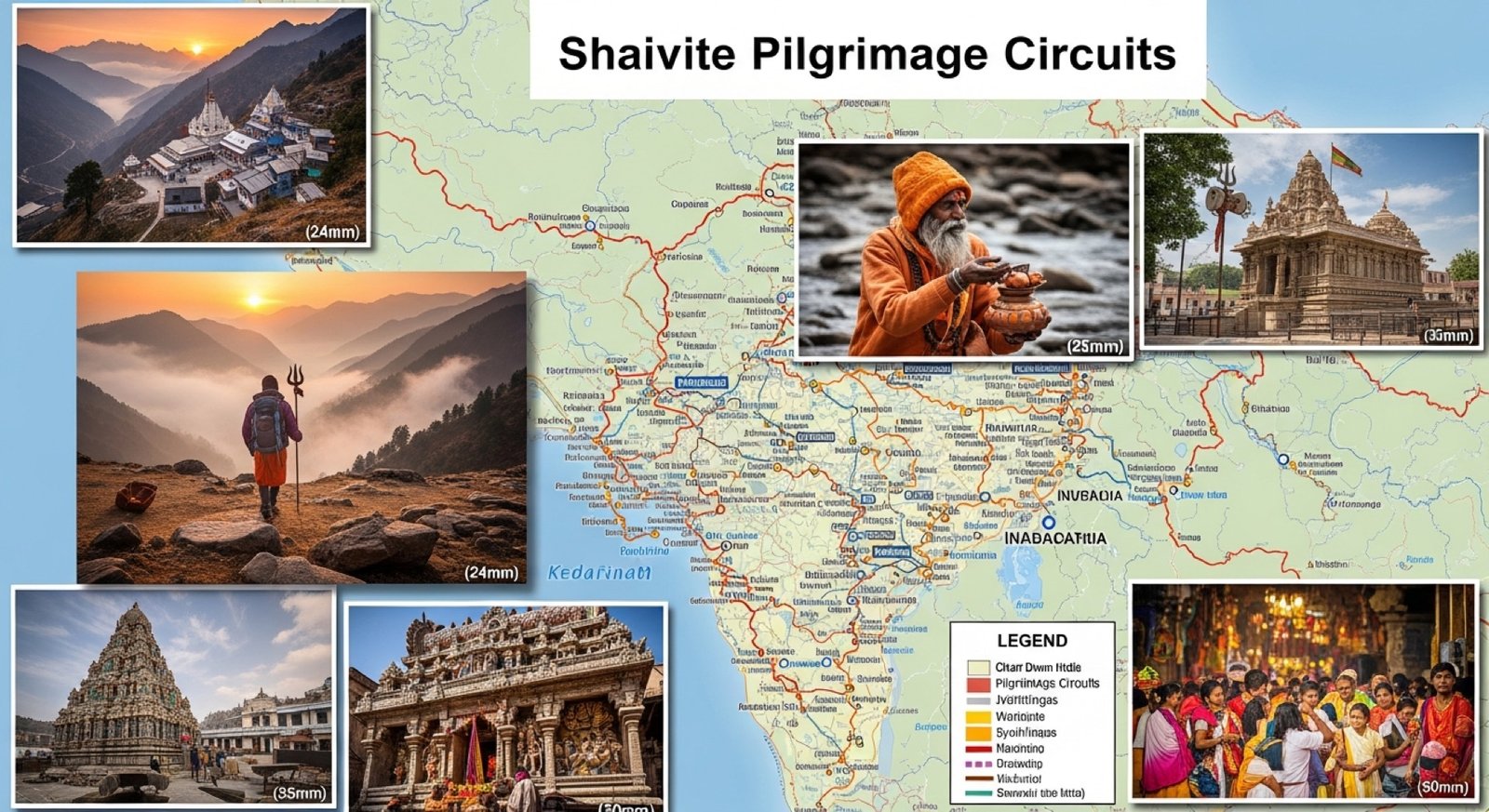
The Pancha Bhoota Stalam is a winter yatra - October to March. The Himalayan Char Dham Yatra (Yamunotri, Gangotri, Kedarnath, Badrinath) is a summer yatra - April to October. Together they form a year-round path for a Shaivite pilgrim seeking the full geography of Shiva worship across India.
Pilgrims flying into North India from Chennai, Hyderabad, or Bangalore to complete the Char Dham after the South-India circuit can connect through any of our origin-city helicopter routes. The Sahastradhara helipad in Dehradun is the launching point for all four dhams.
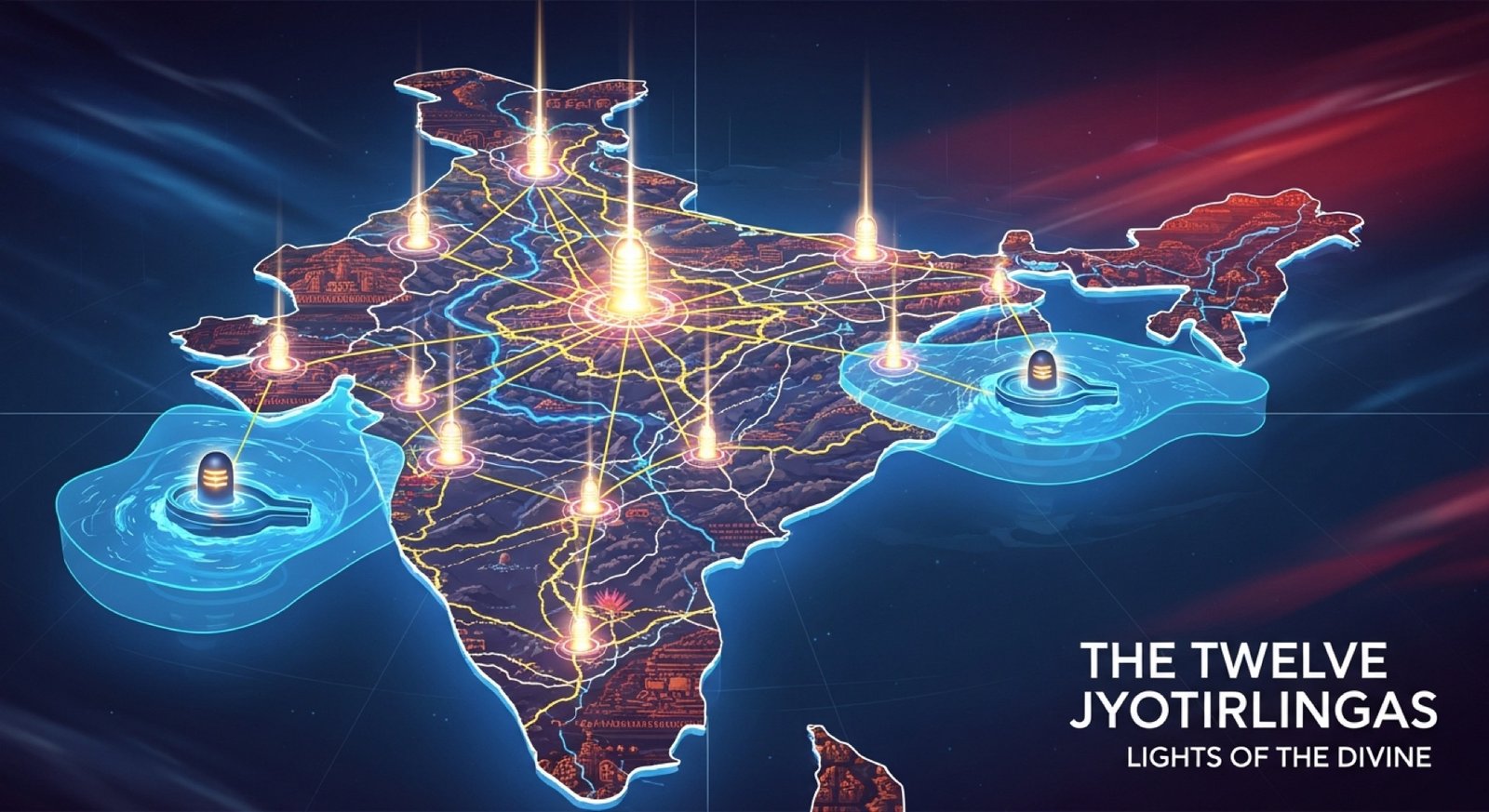
Dedicated Shaivites can also extend their pilgrimage to the 12 Jyotirlingas (including Kedarnath and Rameshwaram), or, for the most committed, to Mount Kailash. The five elements, the twelve lights, and the mountain abode - a complete Shaiva circuit. For the master map of every major Shaivite pilgrimage in India, see the Shiva Circuits guide.
Frequently asked questions
What are the Pancha Bhoota Stalam?
Five Shiva temples, one for each element. Earth at Ekambareswarar (Kanchipuram), Water at Jambukeswarar (Thiruvanaikaval), Fire at Arunachaleswarar (Thiruvannamalai), Air at Srikalahasti (Andhra Pradesh), Space at Thillai Nataraja Temple (Chidambaram).
Ideal order to visit?
Srikalahasti → Kanchipuram → Thiruvannamalai → Chidambaram → Thiruvanaikaval. 3-5 days, ~800 km road circuit from Chennai or Tirupati.
Why do the temples line up on almost the same longitude?
Four of the five sit between 79 deg and 79 deg 42 min E. Built over 1,500 years by different dynasties without modern tools. The scale of the coincidence implies the ancient builders had a sophisticated, inherited sense of geography and sacred geometry. The "magnetic equator" claim you may read online is folklore, not science - but the longitudinal fact is real.
Best time to visit?
October to March. Avoid summer heat and heavy monsoon - especially for the Arunachala Girivalam.
Are these the same as the 12 Jyotirlingas?
No. Two different circuits. The 12 Jyotirlingas (including Kedarnath and Rameshwaram) are self-manifested lingams of light scattered across India. The Pancha Bhoota Stalam are the five specifically encoding the five elements. Dedicated pilgrims complete both.
Can I combine with Char Dham?
In the same year, yes. In the same trip, no - different seasons. Pancha Bhoota in winter (Oct-Mar), Himalayan Char Dham in summer (Apr-Oct).
Does the lamp at Srikalahasti really flicker on its own?
Yes - the chamber is windowless and the entrance largely blocked, yet the flame pulses continuously. Pilgrims read it as the signature of the Vayu Lingam - Shiva in the breath of creation.
What is the Chidambara Rahasyam?
At Chidambaram, behind a black curtain of golden Bilva leaves, an empty space. The Akasha Lingam. God as consciousness - formless, infinite, "the lotus heart of the universe."
Is photography allowed?
Not inside the sanctum. Outer areas usually yes. Drones are banned. Ask the priest first.
Are wheelchairs and elder-friendly access available?
Yes at Ekambareswarar and Chidambaram. The 14 km Girivalam at Arunachala is strenuous - elders typically skip it or do a shortened version. Helicopter packages (~₹5,000+ per person) exist for the hill temples.